How Long For Oven To Cool Down And Why It Really Matters
How long for oven to cool down depends on your oven type, but most home ovens need 30 to 90 minutes to drop from 450°F to room temperature. Understanding oven cooling time helps you bake better, stay safe, and avoid damage from residual heat. Simple tricks like leaving the door ajar and using a cooling rack can cut the wait significantly.
So you just pulled a batch of cookies out of the oven and now you’re staring at a hot box. The question is simple: how long for oven to cool down? It’s not just a matter of waiting. The oven cooling process affects your next bake, your kitchen safety, and even your energy bill. Many people underestimate the heat still trapped inside, leading to burnt fingers or ruined batter. Let’s explore why this wait time really matters.
Most home cooks think the oven is off the moment they flip the switch. That’s far from the truth. The oven temperature drop follows a gradual curve, and the interior stays dangerously hot for a long time. Knowing the oven cooldown duration helps you plan your cooking schedule, avoid accidents, and treat your appliance with care. I’ll walk you through the numbers, the factors, and the best ways to cool your oven faster.
Key Takeaways
- Oven cooling time varies: Gas ovens cool in 30–45 minutes, while self-cleaning models can take over 3 hours.
- Residual heat is real: Carryover cooking continues for up to 10 minutes after you turn off the oven.
- Safety comes first: A hot oven is a fire and burn risk, especially with kids and pets nearby.
- You can speed up cooling: Leaving the door ajar and using a cooling rack are the most effective methods.
- Cleaning too early ruins your oven: Always wait for a full cooldown before wiping or starting a self-cleaning cycle.
- Insulation matters: Thicker oven walls retain heat longer, so oven size and type directly affect cooldown duration.
📑 Table of Contents
How Long Does It Really Take For An Oven To Cool Down?
The short answer is 30 to 90 minutes for a standard home oven. But that range is huge because many variables come into play. A gas oven with a thin interior wall loses heat fast, while a heavy-duty electric oven with multiple insulation layers holds onto warmth much longer. If you’ve just run a self-cleaning cycle, the cooldown period can stretch well beyond three hours. I’ll break this down by oven type so you know exactly what to expect.
Cooling Times By Oven Type
Different ovens use different heating elements and insulation. Here is a quick look at average oven cooling time from 450°F to 100°F.
| Oven Type | Average Cooling Time (450°F to 100°F) | Key Factors |
|---|---|---|
| Gas Oven | 30–45 minutes | Thin walls, open flame, natural convection |
| Electric Oven | 45–75 minutes | Thicker insulation, radiant heat retention |
| Convection Oven | 35–55 minutes | Fan assists heat dissipation |
| Self-Cleaning Oven | 2–4 hours | Heavy insulation for pyrolytic cycle, locked door |
As you can see, the oven cooldown period varies a lot. A convection oven with a fan cools faster because the fan keeps air moving even after the heat source is off. A self-cleaning oven is built to withstand extreme heat, so it retains warmth for hours. This matters if you plan to bake something right after a cleaning cycle.
The Role Of Self-Cleaning Mode
The self-cleaning cycle heats the oven to 800°F or higher to burn off food residue. After the cycle ends, the oven door locks automatically and the interior stays at dangerous temperatures for a long time. You should never try to open the door or wipe the interior during this phase. The oven cooldown duration for a self-cleaning oven is designed to protect the electronics and the door seal. Always let it return to below 600°F before opening the door fully.
Quick Tips For Faster Cooling
- Turn off the oven 10 minutes early: Use residual heat to finish baking cookies or warming bread.
- Use a cooling rack: Remove hot pans and place them on a wire oven cooling rack to stop carryover cooking.
- Keep the oven light on: The light generates a tiny amount of heat, but leaving it on prevents condensation from forming on the glass.
- Avoid opening the door repeatedly: Every peek lets heat escape but also lets cold air in, which can slow the overall cooling process.
Why Cooling Time Matters For Your Baking And Cooking
Waiting for an oven to cool down is not just about avoiding burned hands. The oven temperature drop directly impacts your results. If you put batter into a pan sitting on a still-hot oven cooling rack, the bottom will over-brown while the inside stays raw. Understanding residual heat and carryover cooking helps you time your recipes perfectly.
Residual Heat And Carryover Cooking
Even after you turn off the oven, the metal walls, the baking stone, and the racks hold a lot of thermal energy. This residual heat continues to cook food for 5 to 10 minutes after removal. That’s why a cake might rise too high and then collapse, or why cookies keep spreading on a hot sheet pan. If you want precise baking after preheat control, you must account for the oven cooldown period of your baking surface.
For example, a pizza stone retains heat for a long time. If you slide a pizza onto a stone that is still at 500°F, it will crisp aggressively. If you want a softer crust, you need to wait for the stone to cool. This is where knowing your oven cooling time gives you a real advantage.
Safety Concerns With A Hot Oven
A hot oven is a fire and burn hazard. Children and pets are especially vulnerable. The oven door can radiate heat for an hour or more, and touching the glass can cause severe burns. I always remind my friends to set a timer and tell everyone in the house that the oven is still on. Safety cooling should be a priority, not an afterthought.
Another hidden risk is leaving a dirty oven with grease splatters inside while it’s still hot. Grease can smoke or even ignite if it hits a heating element. Letting the oven cool before you clean it reduces this danger significantly. This is why the oven cooling process matters for more than just your next recipe.
Factors That Affect How Fast Your Oven Cools
Not all ovens cool at the same rate. Several physical and usage factors determine the oven cooldown duration. Understanding these helps you predict wait times and adjust your cooking habits.
Insulation And Oven Size
Thicker insulation keeps heat in longer. That’s great for energy efficiency during baking, but it means a longer oven cooling time afterward. A compact countertop oven will cool much faster than a full-size range oven because it has less mass and thinner walls. If you’re using a small oven toaster, expect it to drop temperature quickly.
Door Position And Ventilation
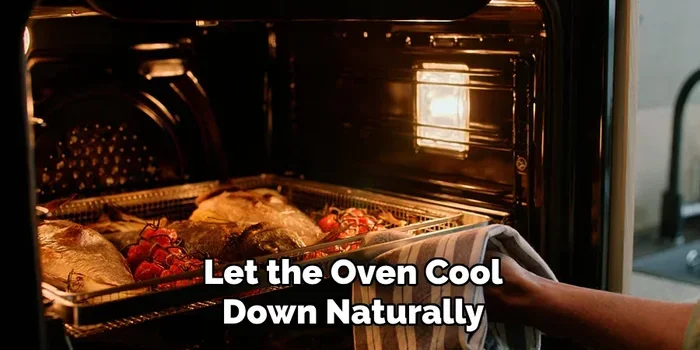
The position of the oven door is the single biggest lever you control. A fully closed door traps heat inside, creating a greenhouse effect. Leaving the door cracked open by just one inch dramatically increases airflow and speeds up the oven temperature drop. However, you should never leave the door wide open on a self-cleaning oven, as this can damage the seal and the control board.
Ventilation also matters. Ovens with rear exhaust vents or convection fans cool faster because they actively move hot air out of the cavity. If your oven lacks a fan, natural convection still works, but it’s slower. Placing the oven away from walls and cabinets allows heat to escape from all sides, which reduces the oven cooldown period.
The Oven Cooling Fan
Many modern ovens have a cooling fan that runs automatically after the heating elements turn off. This oven cooling fan is a lifesaver. It forces ambient air across the hot interior walls and pushes it out through vents. If your oven has this feature, you can cut cooling time by 20 to 30 percent. Listen for the fan to stop before you assume the oven is safe to touch.
Tips To Speed Up Your Oven Cool Down Safely
Sometimes you need the oven cool fast. Maybe you’re baking a second batch of muffins, or you just want to clean up right away. Here are safe, effective ways to reduce the oven cooldown duration without risking damage.
Using A Cooling Rack
As soon as you pull out your baked goods, transfer the pan to a wire oven cooling rack. This stops the bottom from overcooking and removes the heat source from the oven interior. The pan cools on the rack, and the oven loses heat faster because there’s less thermal mass inside. A cooling rack with feet elevates the pan and allows air to circulate underneath.
Leaving The Door Ajar
For standard ovens, leaving the door cracked open is the fastest safe method. I like to prop the door open with a wooden spoon handle so it stays about one inch ajar. This lets hot air escape and draws in cooler room air. You’ll feel the oven temperature drop within minutes. Just be careful with children and pets, and never leave a gas oven door open unattended if you smell gas.
The Ajar Door Method
The ajar door method works best for electric and convection ovens. For self-cleaning ovens, follow the manufacturer’s instructions—usually the door must remain locked until the interior drops below 600°F. After that, you can crack it open. If you’re in a hurry, you can place a fan facing the oven opening to blow the hot air out of the kitchen. This is a great trick for speeding up the oven cooling process after a large roast.
Common Mistakes That Slow Down Cooling
- Leaving racks full of hot pans: The pans act as heat sinks and radiate warmth back into the cavity.
- Keeping the door shut: Trapped heat has nowhere to go, so the oven cooldown time stretches out.
- Ignoring the oven thermometer: You might think the oven is cool, but the internal temperature could still be 300°F. Use an oven temperature gauge to check.
Common Mistakes People Make After Turning Off The Oven
Even experienced cooks make errors that waste time or damage the oven. Learning what not to do is just as important as knowing how to cool the oven properly.
Putting Cold Items On Hot Racks
Placing a cold glass baking dish on a hot rack can cause thermal shock. The glass cracks or shatters. Always wait for the rack to cool, or use a folded towel as a buffer. This simple habit protects your bakeware and keeps the oven cooling rack in good condition.
Ignoring The Self-Cleaning Cycle
Starting a self-cleaning cycle right after cooking is tempting, but it’s a bad idea. The oven is already hot, and the pyrolytic cycle heats it even further. This puts extreme stress on the electronics and the door lock mechanism. Always let the oven return to room temperature before running a cleaning cycle. The oven cooldown period exists for a reason.
Wiping The Interior While It’s Still Warm
Using a wet cloth on a warm oven surface can create steam that gets trapped under the enamel. Over time, this leads to peeling or discoloration. Wait until the oven is completely cool, then use a damp sponge with mild soap. For stubborn grease, a paste of baking soda and water works wonders on a fully cooled surface.
When To Wait Before Cleaning Your Oven
Cleaning a hot oven is risky and ineffective. The oven cooling process should be complete before you start any scrubbing. Here’s how to know it’s safe.
Cool Down Before Wiping
You can lightly wipe the oven walls with a dry cloth when the interior is below 150°F. Above that temperature, grease softens but doesn’t rinse away easily. Wait until the oven is at room temperature, then use a damp cloth. For the oven door glass, a paste of baking soda and water left for 15 minutes lifts baked-on grime without scratching.
Using The Oven’s Built-In Cool Down Feature
Some high-end ovens have a built-in cool down feature that runs the fan and lights for a set period after the door opens. This accelerates the oven temperature drop and makes the interior safe to touch faster. Check your owner’s manual to see if your model has this function. It’s a great way to reduce the oven cooldown duration without any extra effort.
In summary, how long for oven to cool down is a question with a simple answer that varies by oven type, size, and usage. Most home ovens need 30 to 90 minutes, but self-cleaning models can take hours. The oven cooling time matters for baking quality, kitchen safety, and appliance longevity. By understanding the oven cooling process and using simple tricks like leaving the door ajar and using a cooling rack, you can speed things up safely. Always respect the heat, plan your cooking schedule around the oven cooldown period, and never rush a self-cleaning cycle. Your oven—and your fingers—will thank you.
Frequently Asked Questions
How long should I wait before opening my oven door after a self-cleaning cycle?
Wait until the oven cools below 600°F, which usually takes 2 to 3 hours. The door lock will release automatically once the temperature drops to a safe level. Never force the door open during the cycle.
Can I put a wet cloth inside a hot oven to cool it down?
No. Putting a wet cloth on a hot oven surface can cause steam burns and may crack the enamel or glass. Always let the oven cool completely before wiping it down.
Does leaving the oven door open after use damage the oven?
Leaving the door cracked open for a few minutes is safe and helps cool the oven faster. However, leaving it wide open for extended periods can cause the door seal to warp over time, reducing energy efficiency.
Why does my oven still feel hot hours after I turn it off?
Ovens with heavy insulation, like self-cleaning models, retain heat for hours. The interior mass holds thermal energy, and the oven cooling fan may run for a long time to dissipate it. This is normal and by design.
How can I tell if my oven is cool enough to clean?
Use an oven temperature gauge to check the interior temperature. If it reads below 100°F, it’s safe to wipe. If you don’t have a gauge, wait at least 2 hours after turning the oven off and touch the interior wall lightly with the back of your hand.
Is it safe to put a cold pan on a hot oven rack?
It is not safe. Thermal shock can crack glass and ceramic pans. Always let the rack cool or use a trivet. Transferring hot pans to a cooling rack on the countertop is the best practice.