How To Remove Grease From Oven Quickly And Safely
Discover the easiest and safest ways to remove grease from oven surfaces using household ingredients and professional-grade cleaners. This guide covers proven methods for tackling burnt grease, greasy residue, and stubborn stains on oven interiors, racks, and glass doors. You will learn natural cleaning solutions, chemical degreasers, and prevention tips to keep your clean oven for good.
Grease in the oven is one of the most frustrating kitchen problems you will face. It splatters during cooking, drips from pans, and builds up into a sticky, hardened mess over time. Whether you are dealing with light grease stains or heavy burnt grease crusts, knowing how to remove grease from oven surfaces quickly and safely makes all the difference.
This guide walks you through every proven method for grease removal from your oven. You will learn how to use simple household items like baking soda and vinegar, when to reach for commercial degreasers, and how to prevent grease buildup in the first place. No matter what type of oven you own, these steps will help you achieve a clean oven without harsh scrubbing or dangerous shortcuts.
Let us be honest — nobody enjoys cleaning the oven. It is a chore most people put off for weeks or even months. But with the right approach, you can cut the cleaning time dramatically and get impressive results. Keep reading to find the method that works best for your situation.
Key Takeaways
- Baking soda and vinegar are powerful, safe, and affordable solutions for grease removal from oven surfaces.
- Heavy-duty degreasers work best for severe grease buildup and burnt-on stains inside the oven.
- Soaking oven racks in hot soapy water or a bathtub dramatically loosens baked-on grease.
- Regular oven maintenance prevents deep grease accumulation and makes cleaning faster.
- Natural cleaners like lemon water and dish soap are gentle yet effective for light grease stains.
- Safety first always — wear gloves, ventilate the kitchen, and never mix certain chemicals.
- Self-cleaning ovens offer a built-in option but come with specific precautions you should know.
📑 Table of Contents
Why Grease Builds Up Inside Your Oven
Understanding why grease accumulates helps you fight it more effectively. Every time you cook, fats and oils from food splatter onto the oven walls, floor, and racks. Over time, these droplets heat, cool, harden, and layer on top of each other. The result is thick, baked-on grease that seems impossible to remove.
The Science Behind Burnt Grease
When cooking oils reach high temperatures, they undergo a process called polymerization. This means the liquid fats transform into a hard, plastic-like coating on your oven surfaces. That is why fresh grease wipes away easily, but grease that has been baked on for days or weeks requires much more effort to remove.
Several factors speed up grease buildup in your oven:
- Frequent high-heat cooking like broiling, roasting, and frying
- Cooking fatty foods such as bacon, sausages, and ground meat
- Poor oven ventilation that traps grease particles in the air
- Infrequent cleaning that allows layers to stack up
- Using foil on oven floors that traps grease against the surface
The good news is that early intervention makes everything easier. If you catch grease stains while they are still soft, a quick wipe-down takes seconds. But for that heavy-duty grease that has been sitting for months, you need stronger methods, which we will cover next.
Best Methods To Remove Grease From Oven
Not all grease buildup is the same, so you need the right method for the job. Here are the most effective approaches ranked from easiest to most intensive.
Method 1: Baking Soda Paste
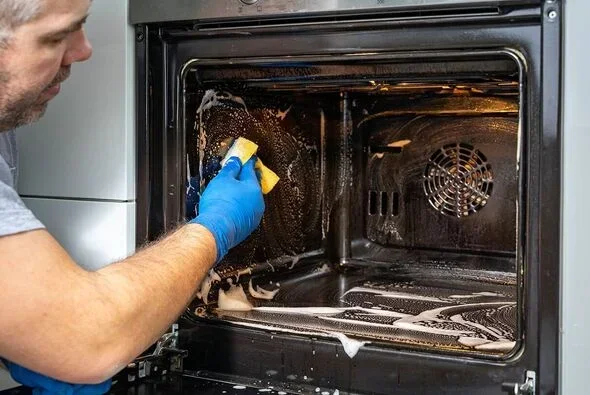
This is the most popular natural method for grease removal, and for good reason. Baking soda is a gentle abrasive that cuts through grease without damaging your oven surfaces.
Here is how to do it:
- Mix three parts baking soda with one part water to form a thick paste.
- Spread the paste generously over all greasy surfaces inside the oven.
- Avoid the heating elements if your oven has exposed ones.
- Let the paste sit for at least 12 hours or overnight.
- Wipe away the paste with a damp cloth or sponge.
- Spray vinegar on any remaining residue — it will fizz and lift the remaining grease.
- Wipe clean with a fresh damp cloth.
This method works wonderfully for light to medium grease buildup. For heavier stains, you may need to repeat the process or leave the paste on for longer.
Method 2: Vinegar and Water Solution
White vinegar is a natural degreaser that breaks down fatty residues effectively. It is safe, non-toxic, and leaves no chemical smell behind.
To use this method:
- Fill a spray bottle with equal parts white vinegar and warm water.
- Spray the solution directly onto greasy surfaces.
- Let it sit for 15 to 20 minutes.
- Scrub gently with a non-abrasive sponge.
- Wipe clean with a wet cloth.
Vinegar works best as a follow-up treatment after using baking soda. The chemical reaction between the two creates a powerful cleaning solution that lifts grease effortlessly.
Method 3: Commercial Oven Cleaners
When natural methods are not enough, heavy-duty degreasers from your local store can handle the toughest jobs. Look for products specifically designed for oven cleaning.
Popular options include:
- Oven sprays like Easy-Off or Mr. Muscle — these penetrate baked-on grease quickly.
- Foaming cleaners that cling to vertical surfaces and work on contact.
- Gel-based cleaners that stick to horizontal surfaces and do not drip.
Always follow the manufacturer instructions when using chemical cleaners. Wear gloves, open windows for ventilation, and never use these products near open flames or heated elements. Most commercial oven cleaners require you to spray, wait 15 to 30 minutes, and then wipe away the dissolved grease.
Method 4: Steam Cleaning
Steam is an excellent way to loosen grease without any chemicals at all. The heat and moisture soften hardened grease, making it easy to wipe away.
Here is how to steam clean your oven:
- Place a oven-safe bowl filled with water and a squeeze of lemon juice on the bottom rack.
- Heat the oven to 200°F (93°C) for about 10 minutes.
- Turn off the oven and let it sit for 15 minutes with the door closed.
- Remove the bowl and use a damp cloth to wipe away the loosened grease.
This method is perfect for maintenance cleaning and works best when you catch grease early before it hardens into layers.
How To Clean Oven Racks And Glass Door
The oven interior is not the only place grease hides. Your racks and glass door collect just as much buildup, and they often need separate treatment.
Cleaning Oven Racks
Oven racks are removable, which is a huge advantage. You do not need to clean them inside the oven at all.
Here is the most effective approach:
- Remove the racks from the oven.
- Place them in a bathtub or large sink.
- Cover them with hot water and add two tablespoons of dish soap.
- For heavy grease, add half a cup of baking soda and let them soak for 2 to 4 hours.
- Scrub with a non-scratch sponge or brush.
- Rinse thoroughly and dry completely before reinstalling.
For extremely greasy racks, you can also use a garbage bag method. Place the racks in a large bag, add a gallon of ammonia, seal it, and let it sit overnight outdoors or in a well-ventilated garage. The ammonia fumes dissolve the grease without you needing to scrub at all.
Cleaning The Oven Glass Door
The glass on your oven door collects grease streaks that are especially visible and frustrating. Here is how to restore it to clear:
- Make a paste of baking soda and water.
- Spread it across the glass and let it sit for 20 minutes.
- Spray vinegar over the paste and let it fizz.
- Scrub gently with a microfiber cloth in circular motions.
- Wipe clean with a fresh damp cloth.
For stubborn grease stains on the glass, a razor blade scraper used at a 45-degree angle works wonders. Just be careful not to scratch the surface. This method is one of the most reliable ways to handle grease stains on oven glass.
Natural Vs Chemical Cleaners For Grease Removal
Choosing between natural and chemical cleaners depends on the severity of your grease problem and your personal preferences. Both approaches have clear strengths.
| Factor | Natural Cleaners | Chemical Cleaners |
|---|---|---|
| Effectiveness on light grease | Excellent | Excellent |
| Effectiveness on heavy grease | Good | Excellent |
| Safety for food contact surfaces | Very safe | Requires thorough rinsing |
| Environmental impact | Low | Higher |
| Cost | Very low | Moderate |
| Time required | Longer soak time | Faster results |
| Smell | Lemon or vinegar scent | Strong chemical odor |
Many people prefer a hybrid approach. They use natural methods for regular cleaning and keep a commercial degreaser on hand for deep cleaning sessions. This strategy keeps your greasy oven under control without relying too heavily on harsh chemicals.
Quick Tips For Choosing The Right Cleaner
- Check if your oven is self-cleaning — some manufacturers warn against using certain chemical cleaners on these models.
- Read labels carefully and avoid cleaners containing lye if you have a continuous-cleaning oven.
- Test any cleaner on a small hidden area first to ensure it does not damage the finish.
- Always rinse surfaces thoroughly after using any chemical product.
Preventing Grease Buildup In Your Oven
The best way to make grease removal easier is to prevent buildup in the first place. A few simple habits can save you hours of scrubbing later.
Use A Baking Sheet Or Foil Liner
Placing a baking sheet or oven-safe foil on the bottom rack catches drips before they reach the oven floor. This simple step prevents grease from baking onto the oven surface. Just remember to replace the liner regularly and never block the oven’s ventilation holes with foil.
Clean Spills Immediately
The moment a spill occurs, wipe it up as soon as the oven cools enough to handle safely. Fresh grease wipes away with a damp cloth in seconds. Once it hardens, you need the methods described earlier.
Cover Food While Cooking
Using a lid or foil cover when cooking greasy foods reduces splattering significantly. This keeps your oven interior much cleaner between deep cleaning sessions.
Schedule Regular Maintenance
Set a reminder to do a quick oven wipe-down every two weeks. This oven maintenance routine takes only five minutes and prevents the need for intensive cleaning sessions. Light grease removal every few weeks keeps your kitchen cleaning routine simple and manageable.
Safety Tips For Oven Cleaning
Cleaning the oven involves chemicals and physical effort, so safety should always come first. Follow these precautions to protect yourself and your oven.
Wear Protective Gloves
Commercial degreasers can irritate or burn your skin. Always wear rubber or nitrile gloves when handling strong cleaning products. Even natural solutions like baking soda can dry out your hands with prolonged contact.
Ventilate Your Kitchen
Open windows and turn on the exhaust fan before you start cleaning. Fumes from oven cleaners can be harmful if inhaled in enclosed spaces. If you are using ammonia or commercial sprays, ventilation is especially critical.
Never Mix Chemicals
Mixing different cleaning products can create dangerous chemical reactions. Never combine bleach with ammonia, and do not mix vinegar with commercial cleaners containing bleach. Stick to one product at a time and rinse surfaces thoroughly between treatments.
Let The Oven Cool Completely
Never attempt to clean a warm oven. Hot surfaces can cause cleaning chemicals to evaporate too quickly, reducing their effectiveness and releasing harmful fumes. Wait until the oven is completely cool before you begin any cleaning process.
Frequently Asked Questions
Can I use the self-cleaning feature to remove grease?
Yes, most modern ovens have a self-cleaning cycle that uses high heat to burn off grease and food residue. This method works well for heavy grease buildup inside the oven cavity. However, you should remove oven racks before running the cycle, as the extreme heat can damage them. Also, the self-cleaning process produces a lot of smoke and odor, so make sure your kitchen is well ventilated.
How often should I deep clean my oven?
Most experts recommend deep cleaning your oven every 3 to 6 months depending on how frequently you cook. If you cook fatty or greasy foods often, you may need to clean it more frequently. Regular light cleaning between deep sessions makes each cleaning much easier and faster.
Is baking soda safe for all oven types?
Baking soda is safe for standard ovens, convection ovens, and most gas ovens. However, if you have a continuous-cleaning or self-cleaning oven, check your manufacturer guidelines first. Some coated oven interiors may be sensitive to abrasive pastes, though baking soda is generally gentle enough for most surfaces.
What is the best degreaser for oven grease?
Heavy-duty oven sprays like Easy-Off are among the most effective degreasers for tough grease stains. For a natural alternative, a mixture of baking soda, dish soap, and vinegar works surprisingly well on most grease buildup. The best choice depends on how severe your grease problem is and whether you prefer chemical or natural solutions.
Can I clean oven grease with just dish soap and hot water?
Dish soap and hot water work well for light grease and routine maintenance. However, for baked-on or hardened grease, you will need stronger methods like baking soda paste, vinegar solutions, or commercial degreasers. Dish soap alone is usually not enough for heavy grease removal from oven surfaces.
How do I remove grease from the inside of the oven door?
The glass on the oven door responds well to a baking soda paste left on for 20 minutes, followed by spraying vinegar and wiping clean. For stubborn grease streaks, a razor blade scraper at a 45-degree angle removes buildup without scratching the glass. Always use a gentle touch on the glass to avoid damage.
Final Thoughts On Grease Removal
Learning how to remove grease from oven surfaces is a valuable skill that saves you time, money, and frustration. Whether you prefer natural methods like baking soda and vinegar or powerful commercial degreasers, the key is consistency and prevention. Regular maintenance keeps grease from building up into the heavy, stubborn layers that make cleaning so difficult.
Start with the simplest method for your current level of grease buildup. If baking soda and vinegar do the job, stick with that gentle approach. Reserve heavy-duty cleaners for the toughest situations. And always prioritize safety by wearing gloves, ventilating your space, and following product instructions carefully.
A clean oven not only looks better but also performs better. Grease buildup can affect your oven’s efficiency and even create odors during cooking. With the methods in this guide, you have everything you need to keep your oven sparkling and functioning at its best. Pick your preferred method, set aside 30 minutes, and enjoy the satisfaction of a truly clean oven again.