Why Does My Electric Oven Keep Turning Off By Itself
Why does my electric oven keep turning off by itself? This common frustration can stem from several simple causes, from a tripped breaker to a faulty temperature sensor. Understanding the reasons your oven shuts off randomly helps you troubleshoot safely and decide if a DIY fix is possible. In this guide, you’ll learn the top reasons your oven turns off mid-cook and the easy steps to get it working again.
Why does my electric oven keep turning off by itself? It’s a maddening experience. You’re baking a roast or reheating pizza, and suddenly the oven shuts off without warning. The food stops cooking, the timer resets, and you’re left wondering what went wrong. This problem is more common than you think, and it can happen to any electric oven, from a basic model to a high-end convection unit.
The good news is that you don’t need to be a technician to understand the root causes. Most of the time, the issue comes down to a few simple components that wear out or get tripped. In this article, I’ll walk you through every possible reason your oven turns off randomly. I’ll show you how to test each part, what to look for, and when it’s safe to fix things yourself. By the end, you’ll know exactly what to do next.
Let’s get started. We’ll cover everything from a tripped circuit breaker to a failing control board. You’ll learn how to spot the signs of a thermal fuse blowout, how to check your oven temperature sensor, and why a dirty door switch can cause big problems. I’ll also share quick tips that save time and money. So grab your screwdriver and let’s figure out why your oven keeps turning off.
Key Takeaways
- Thermal fuse failure: A blown thermal fuse is the most common reason your oven turns off and won’t heat again.
- Faulty temperature sensor: A bad sensor can trick the oven into shutting down to prevent overheating.
- Power supply issues: Tripped breakers, loose wiring, or a faulty outlet can cause intermittent shutdowns.
- Control board malfunction: The oven’s brain can fail, causing random shutoffs and error codes.
- Door switch or seal problems: A damaged door switch or worn seal triggers safety shutoffs.
- Self-cleaning cycle lockout: The oven may turn off during or after self-cleaning if the door lock mechanism is stuck.
- When to call a pro: If basic checks fail, a licensed technician can safely diagnose electrical and control issues.
📑 Table of Contents
Why Does My Electric Oven Keep Turning Off By Itself?
When an oven shuts off by itself, it’s usually trying to tell you something. Modern ovens have multiple safety systems that monitor heat, power, and door position. If any of these systems detect a problem, the oven will turn itself off to prevent damage or fire. This is a feature, not a bug. But when it happens in the middle of cooking, it’s incredibly frustrating.
The reasons an oven turns off randomly fall into a few categories: power issues, sensor failures, mechanical switches, and control board errors. Sometimes the fix is as easy as pressing a reset button. Other times, you need to replace a part. Understanding which category your problem falls into is the first step to a solution. Below, I break down each category so you can start diagnosing the issue right away.
Before you dive in, make sure you’ve read your oven’s manual. Every model has a self-diagnostic mode that can display error codes. Writing down these codes before you start troubleshooting will save you a lot of guesswork. Also, always unplug the oven or turn off the breaker before you open any panels. Safety comes first.
Common Reasons Your Oven Shuts Off Randomly
Let’s look at the most common culprits. I’ve seen these issues hundreds of times in repair calls and DIY projects. Each one has a clear set of symptoms that can help you narrow it down.
1. A Tripped Circuit Breaker or Loose Power Connection
Your oven needs a dedicated 240-volt circuit. If the breaker trips, the oven loses power and turns off. This often happens when you run the microwave and the oven on the same circuit. The breaker overheats and cuts power to protect the wiring. A loose outlet connection can cause the same problem. The oven might work for a few minutes, then shut off when the plug shifts slightly.
2. A Blown Thermal Fuse
The thermal fuse is a one-time safety device. It blows when the oven overheats and must be replaced. You can’t reset it. If your oven turns off suddenly and never heats up again, the thermal fuse is a prime suspect. Overheating usually happens because of a blocked vent, a dirty oven interior, or a failing fan.
3. Faulty Temperature Sensor or Thermistor
The temperature sensor measures the heat inside the oven and sends data to the control board. If the sensor is dirty, corroded, or broken, the control board gets wrong readings. It might think the oven is too hot and shut it down to protect the food and the appliance. A faulty temperature sensor often causes the oven to cycle on and off rapidly or stop heating mid-cook.
4. Control Board Failure
The control board is the brain of your oven. It manages the bake element, broil element, fan, and timer. When the control board starts to fail, it can cause random shutoffs, error codes, or complete loss of power. A control board malfunction is more expensive to fix, but it’s a common cause of an oven that turns off by itself.
5. Door Switch or Seal Problems
The oven door has switches that tell the control board when the door is closed. If a switch is broken or misaligned, the oven may refuse to heat or turn off when you open the door slightly. A worn door seal can also let heat escape, triggering the safety shutoff. This is a common issue with older ovens.
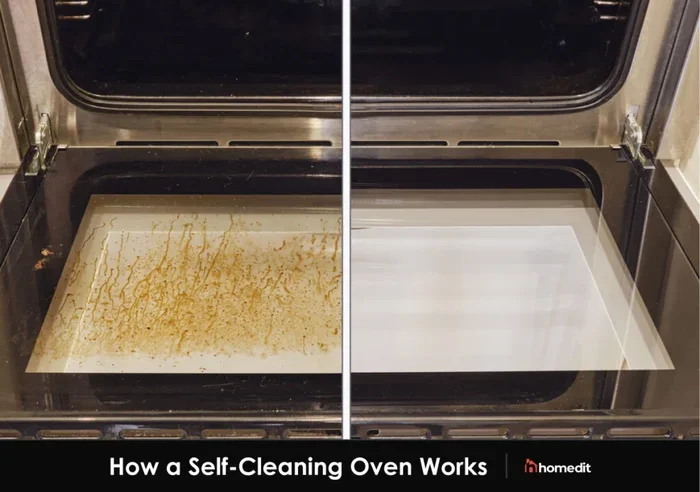
6. Self-Cleaning Cycle Lockout
Many ovens lock the door during the self-cleaning cycle. If the lock mechanism jams or the cycle is interrupted, the oven may turn off and refuse to start again until the door is fully unlocked. This is a safety feature, but it can feel like a malfunction if you don’t know what’s happening.
Quick Tip: If your oven turns off during a self-cleaning cycle, let it cool completely. Then try opening and closing the door firmly. Listen for the lock to click. If it doesn’t click, the door lock motor may need replacement.
Comparison Table: Oven Shutoff Causes and Symptoms
| Cause | Symptom | Fix |
|---|---|---|
| Tripped breaker | Oven stops with no power, other appliances also off | Reset breaker or check outlet |
| Blown thermal fuse | Oven turns off and never heats again | Replace thermal fuse |
| Faulty temperature sensor | Oven cycles on/off rapidly or shows error code | Clean or replace sensor |
| Control board failure | Random shutoffs, error codes, no response | Replace control board |
| Door switch fault | Oven won’t start or turns off when door moves | Replace door switch |
| Self-cleaning lockout | Oven stays off after self-clean cycle | Unplug, wait, and reset |
How to Troubleshoot an Oven That Keeps Turning Off
Now that you know the common causes, it’s time to troubleshoot. I recommend working through these steps in order. Start with the simplest checks and move to the more complex ones. This approach saves time and prevents unnecessary part replacements.
Check the Circuit Breaker and Power Source
Go to your electrical panel and look for the breaker labeled “Oven” or “Kitchen.” If it’s in the tripped position, flip it all the way to off and then back to on. If it trips again immediately, you have a short circuit or an overloaded line. Don’t keep resetting it. Call a qualified electrician. Also, check the outlet with a multimeter to ensure it’s delivering the correct voltage. A loose plug can cause intermittent power loss.
Common Mistake: Many people assume the oven is broken when it’s actually a tripped breaker. Always check the power first. It’s the easiest fix and it costs nothing.
Inspect the Oven Door Switch
The door switch is a small button or lever that activates when the door closes. If it’s stuck, broken, or misaligned, the oven won’t heat. Unplug the oven and remove the control panel or door frame to access the switch. Use a multimeter to test for continuity. If the switch doesn’t click or show continuity when pressed, replace it. This is a cheap part and a simple fix.
Test the Temperature Sensor
The temperature sensor is usually a metal rod located at the back of the oven cavity. Pull it out gently and inspect it for grease, food debris, or corrosion. Clean it with a soft cloth and a mild cleaner. If it still reads incorrectly, test it with a multimeter at room temperature. It should show a resistance of around 1000 to 1100 ohms. If the reading is way off, replace the sensor. A faulty temperature sensor is one of the top reasons an oven turns off by itself.
Look for Error Codes on the Display
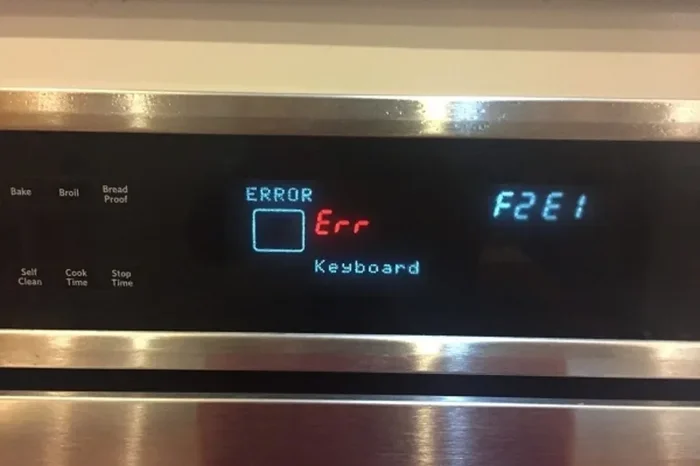
If your oven has a digital display, it may show an error code when it shuts off. Common codes include F1, F2, F3, or F7. Each code points to a specific problem. For example, F1 often means a control board issue, while F3 usually indicates a temperature sensor fault. Look up your model number and the error code in the manual or online. This can instantly tell you what part to check.
Expert Insight: Error codes are your oven’s way of talking to you. Don’t ignore them. They save hours of guesswork and point you directly to the failing component.
Check for a Blown Thermal Fuse
The thermal fuse is usually located near the oven cavity or on the back wall. It looks like a small cylinder with two wires. Test it with a multimeter for continuity. If there’s no continuity, the fuse is blown. You must replace it. Remember, a thermal fuse blows because the oven overheated, so find the root cause of the overheating before you replace the fuse. Otherwise, the new fuse will blow again.
When the Problem Is Safety-Related
Some oven shutoff issues are directly tied to safety features. These are designed to protect you from fire, electric shock, or gas leaks (in the case of gas ovens, but electric ovens have their own safety circuits). Never bypass a safety device to make the oven work. If a safety part is failing, replace it properly.
Blown Thermal Fuse and Overheating
As mentioned, a blown thermal fuse stops the oven from working. Overheating can happen if the oven vent is blocked by foil or food spills. It can also happen if the convection fan fails. In a convection oven turning off repeatedly, a stuck fan motor is a common cause. The fan circulates heat, and without it, the oven overheats quickly. Check the fan blade for obstructions and test the motor with a multimeter.
Wiring and Internal Connections
Loose or corroded wiring inside the oven can cause intermittent power loss. The oven may turn off when you open the door or when you adjust the temperature. This is dangerous because arcing can start a fire. If you smell burning plastic or see scorch marks, stop using the oven immediately. Call a professional. Faulty wiring is not a DIY job unless you have experience with appliance repair.
Oven Safety Features and Auto-Off Timers
Many modern ovens have an auto-off timer that shuts the oven off after a set period. This is a safety feature to prevent fires if you forget to turn the oven off. If your oven turns off after exactly 12 hours, this is likely the cause. Check your manual to see if your model has this feature and how to disable or adjust it. Some ovens also have a child lock that can interfere with operation.
DIY Fixes You Can Try at Home
Not every oven shutoff problem requires a technician. Here are some simple fixes you can do yourself with basic tools. Always unplug the oven or turn off the breaker before you start any repair.
Resetting the Oven
Sometimes the control board just needs a reset. Unplug the oven from the wall for at least 5 minutes. Then plug it back in and turn it on. This clears any temporary error codes and resets the safety circuits. If the oven works normally after the reset, the problem was likely a temporary glitch in the control board.
Cleaning the Temperature Sensor
Grease and food residue on the temperature sensor can cause it to read too high, triggering a shutoff. Remove the sensor and soak it in warm, soapy water for 10 minutes. Scrub it gently with a soft brush. Dry it completely before reinstalling. This simple cleaning often solves the problem of an oven that turns off mid-cook.
Replacing a Faulty Door Switch
If the door switch is broken, you can replace it yourself. Order the exact part for your oven model. Remove the old switch by unscrewing it and disconnecting the wires. Connect the new switch in the same configuration. Test the oven to make sure the door switch clicks and the oven heats properly. This is one of the easiest and cheapest fixes for an oven that shuts off when you open the door.
Quick Tip: Keep a multimeter in your kitchen drawer. It’s the single most useful tool for diagnosing oven problems. A basic digital multimeter costs under $20 and can save you hundreds of dollars in repair calls.
Common Mistakes That Cause Oven Shutoffs
Avoid these common pitfalls that can make your oven turn off by itself:
- Overloading the circuit: Running a microwave and oven on the same outlet can trip the breaker.
- Ignoring error codes: Dismissing an F1 or F3 code can lead to a complete control board failure.
- Using foil on the oven floor: Foil blocks vents and traps heat, causing overheating and thermal fuse blows.
- Forcing the door closed: A damaged door hinge can prevent the switch from engaging properly.
- Skipping regular cleaning: Grease buildup on sensors and fans leads to false readings and overheating.
Preventing Your Oven from Turning Off Again
Once you’ve fixed the problem, take steps to prevent it from happening again. Regular maintenance keeps your oven running smoothly and extends its lifespan. A few simple habits can save you from the frustration of an oven that shuts off mid-cook.
Regular Maintenance Tips
Clean your oven interior after every use. Wipe up spills immediately to prevent grease buildup. Check the temperature sensor for debris once a month. Inspect the door seal for cracks and replace it if it’s worn. Keep the vent openings clear of foil and food scraps. Run the self-cleaning cycle only when necessary and follow the manufacturer’s instructions.
Expert Insight: I recommend doing a quick visual inspection of your oven every few months. Look for loose wires, burnt smells, or unusual noises. Catching small issues early prevents big breakdowns.
When to Call a Professional
If you’ve checked the breaker, cleaned the sensor, and tested the door switch, but your oven still turns off by itself, it’s time to call a pro. A licensed appliance technician can safely test the control board, wiring, and internal components. They have the tools and expertise to handle electrical faults. Don’t risk your safety by opening up the oven’s main control area if you’re not trained. A professional repair is often the most cost-effective solution in the long run.
Here are signs you definitely need a technician:
- The oven trips the breaker every time you turn it on.
- You see sparks or smell burning plastic inside the oven.
- The control board shows multiple error codes that keep returning.
- The oven turns off randomly, even when all the simple checks pass.
- You’re not comfortable working with 240-volt electrical components.
Conclusion
Why does my electric oven keep turning off by itself? The answer is usually one of a handful of common causes: a tripped breaker, a blown thermal fuse, a faulty temperature sensor, a bad control board, a broken door switch, or a self-cleaning lockout. By working through the troubleshooting steps in this article, you can identify the problem and fix it yourself in many cases. If the issue is safety-related or electrical, don’t hesitate to call a professional. Your oven is a major appliance, and keeping it running safely is the top priority. I hope this guide gives you the confidence to tackle the problem head-on and get back to cooking without interruption.
Frequently Asked Questions
Why does my oven turn off after 10 minutes?
This is often caused by a faulty temperature sensor or a thermal fuse that’s starting to fail. The sensor may be reading too high a temperature and triggering a safety shutoff. Clean the sensor first, and if that doesn’t work, test it with a multimeter and replace it if needed.
Can a tripped breaker cause an oven to turn off by itself?
Yes, absolutely. A tripped circuit breaker cuts power to the oven, causing it to shut off suddenly. If the breaker trips again after you reset it, you may have an overloaded circuit or a short in the oven’s wiring. Check other appliances on the same circuit and consider having an electrician evaluate the outlet.
Is it safe to use an oven that keeps turning off?
No, it’s not safe. An oven that shuts off randomly can leave food undercooked, which poses a food safety risk. It can also indicate an electrical fault that could lead to a fire. Stop using the oven and troubleshoot the issue before turning it back on.
How much does it cost to fix an oven that turns off by itself?
Cost depends on the cause. A door switch or temperature sensor replacement typically costs $50 to $150 for parts and labor. A thermal fuse is usually under $50. A control board replacement can range from $200 to $600. Always get a quote from a licensed technician before agreeing to a major repair.
What does it mean when the oven displays an error code and turns off?
Error codes are your oven’s way of pointing to a specific problem. For example, F1 usually means a control board fault, while F3 points to a temperature sensor issue. Look up the code in your oven’s manual or search online with your model number. The code tells you exactly which part to inspect or replace.
Can a dirty oven cause it to turn off during cooking?
Yes, a dirty oven can cause shutoffs. Grease and food debris on the temperature sensor can make it read incorrectly. Blocked vents from spills can cause overheating. A dirty door switch can also fail to register the door as closed. Regular cleaning prevents many of these issues and keeps your oven running reliably.