What Temperature To Slow Cook A Roast In The Oven At Home
Learning what temperature to slow cook a roast in the oven is the key to a tender, juicy pot roast. This guide shares the ideal low oven temperature, timing, and simple steps for perfect results. You’ll discover how to braise a tough cut of meat into a melt-in-your-mouth dinner with minimal effort.
There’s nothing quite like a slow cook roast that falls apart at the touch of a fork. Whether you’re planning a Sunday dinner or a holiday feast, knowing what temperature to slow cook a roast in the oven makes all the difference. The right oven temperature for roast turns a tough cut of meat into a tender, juicy masterpiece.
Low and slow cooking is the secret. It uses gentle heat to break down connective tissue and collagen, resulting in a tender roast with rich flavor. This guide will walk you through the ideal temperature, timing, and simple steps you can follow at home.
By the end, you’ll feel confident enough to braise any tough cut of meat in your oven-safe Dutch oven. Let’s dive into the details of slow roasting and discover how easy it is to achieve restaurant-quality results.
Key Takeaways
- Low and slow is the way: Cook at 250°F to 325°F for tender results.
- Use a Dutch oven or roasting pan: A heavy pot retains moisture.
- Braising liquid matters: Broth, wine, or water creates steam and flavor.
- Internal temperature is key: Aim for 195°F to 205°F for fork-tender meat.
- Rest the roast: Let it sit for 15-20 minutes before slicing.
- Time varies by cut: Chuck roast takes 3-4 hours, pork shoulder 4-5 hours.
- Season generously: Salt and aromatics enhance the slow-cooked flavor.
📑 Table of Contents
What Temperature to Slow Cook a Roast in the Oven: The Ideal Range
The best braising temperature for a roast in the oven falls between 250°F and 325°F. This range is the heart of low and slow cooking. It allows the meat to cook evenly without drying out.
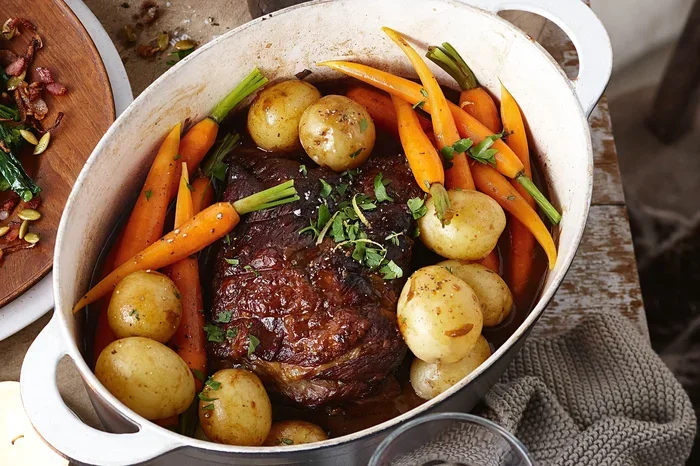
At these temperatures, the oven surrounds the pot with gentle, even heat. The roast slowly braises in its own juices. This method works beautifully for a chuck roast oven dish, pork shoulder, and even a classic pot roast oven dinner.
Many cooks ask, “Is 325°F low enough?” The answer is yes. 325°F is a moderate low temperature that balances time and texture. It produces a tender roast with a lightly browned exterior. If you have more time, drop to 250°F for an even more fork-tender result.
250°F vs. 325°F vs. 350°F
Each temperature has a purpose. Here’s a quick comparison to help you choose.
| Oven Temperature | Cooking Time (per lb) | Best For | Result |
|---|---|---|---|
| 250°F | 45–60 minutes | Chuck roast, pork shoulder | Very tender, falls apart |
| 325°F | 30–45 minutes | Beef roast, pot roast | Tender with light crust |
| 350°F | 25–35 minutes | Smaller cuts, tenderloin | Firmer texture, faster |
For a true oven-braised roast, stick with 250°F or 325°F. These temperatures slowly melt the collagen in tough cuts. The result is a tender roast that shreds easily.
Why Low and Slow Cooking Works
Understanding the science behind low and slow cooking helps you trust the process. It’s not just tradition—it’s chemistry.
The Science of Collagen Breakdown
Tough cuts like chuck and shoulder contain a lot of connective tissue. This tissue is made of collagen. Collagen starts to dissolve into gelatin at temperatures between 160°F and 180°F. But it takes hours for this to happen fully.
When you slow roast at 250°F or 325°F, the collagen has time to break down. The meat becomes fork-tender and juicy. The gelatin also gives the braising liquid a silky, rich body.
Moisture Retention
A covered pot traps steam. This steam keeps the roast moist. The braising liquid—whether it’s broth, wine, or water—creates a humid environment. This prevents the meat from drying out.
In a slow cooker roast, the same principle applies. The sealed environment is perfect for oven-braised roast dishes. The meat self-bastes as it cooks.
Step-by-Step: How to Slow Cook a Roast in the Oven
Follow these simple steps for a perfect pot roast oven dinner. The process is easy, but patience is key.
Step 1: Season and Sear the Roast
Start by patting the meat dry. Season it generously with salt and pepper. Then, heat a little oil in your oven-safe pot or Dutch oven.
Sear the roast on all sides until it’s deeply browned. This step adds flavor through the Maillard reaction. It also creates a beautiful fond on the bottom of the pot. Don’t skip this—it makes a big difference.
Step 2: Add the Braising Liquid
Remove the roast and add chopped onions, carrots, and celery. Sauté for a few minutes. Then pour in your braising liquid. Use beef broth, red wine, or a mix of both.
The liquid should come about halfway up the roast. You don’t want to submerge it completely. The roast should stay partially exposed to the steam.
Step 3: Cover and Cook Low and Slow
Place the lid on tightly. Put the pot in the oven set to your chosen oven temperature for roast. For a chuck roast oven roast, 250°F or 325°F works great.
Let it cook undisturbed for several hours. Resist the urge to open the lid too often. Every time you open it, you lose heat and steam.
Step 4: Check for Doneness
Use a meat thermometer. The internal temperature should reach 195°F to 205°F for a truly tender roast. The meat should pull apart easily with a fork.
If it’s not there yet, continue cooking for another 30 minutes. Check again. Every roast is different based on size and cut.
How Long to Cook a Roast in the Oven
The cooking time depends on the temperature and the cut of meat. Here’s a general guide for slow roasting.
- At 250°F: Allow 45–60 minutes per pound. A 3-pound chuck roast takes about 3.5 to 5 hours.
- At 325°F: Allow 30–45 minutes per pound. The same 3-pound roast finishes in about 2 to 3 hours.
- At 350°F: Allow 25–35 minutes per pound. This is faster but less tender.
For a pot roast oven classic, 250°F is the most popular choice. It gives you a forgiving window. You can leave the roast in the oven for an extra hour without it drying out. That makes how long to cook a roast much easier to manage.
Time vs. Temperature: The Trade-Off
Higher temperatures cook faster but risk drying out the meat. Lower temperatures take longer but guarantee tenderness. If you’re short on time, 325°F is a good compromise. It still produces a tender roast with a nice crust.
If you’re cooking a roast beef oven roast for a crowd, 250°F gives you flexibility. You can hold it in the oven for an extra hour and it will still be perfect.
Common Mistakes That Ruin Your Roast
Even experienced cooks make errors. Avoid these pitfalls for a flawless oven-braised roast.
- Opening the oven door too often: This drops the temperature and slows cooking. Keep the lid closed and check only at the halfway point.
- Skipping the sear: Searing builds flavor. A plain roast in liquid tastes flat by comparison.
- Using too much liquid: The roast should not be submerged. Halfway up the meat is ideal.
- Not resting the meat: Cutting too soon releases all the juices. Let it rest for 15-20 minutes.
- Choosing the wrong cut: Lean cuts like sirloin dry out in the oven. Stick to tough cuts with marbling for slow cooking.
One of the biggest mistakes is using a slow cooker roast mindset in the oven. In a slow cooker, the liquid is often high. In the oven, you need less liquid because evaporation is lower with a tight lid.
Expert Tips for the Perfect Oven-Braised Roast
Take your slow roasting to the next level with these professional tips.
- Use a Dutch oven: The heavy cast iron or enameled pot distributes heat evenly. It’s the best tool for a pot roast oven recipe.
- Add aromatics: Throw in a bay leaf, thyme sprigs, and garlic cloves. They infuse the braising liquid with deep flavor.
- Use a meat thermometer: Don’t guess the doneness. A probe thermometer takes the guesswork out of how long to cook a roast.
- Deglaze the pot: After searing, scrape up the fond with a splash of broth or wine. That’s pure flavor gold.
- Finish with fresh herbs: Stir in chopped parsley or rosemary right before serving. It brightens the whole dish.
For a richer braising liquid, try a mix of beef stock and a little tomato paste. The paste adds depth and color. Just a tablespoon or two is enough.
Conclusion
Mastering what temperature to slow cook a roast in the oven is simpler than you think. Stick to 250°F or 325°F for the best results. Use a heavy oven-safe Dutch oven, sear the meat first, and let it braise low and slow.
The oven temperature for roast is the foundation, but the real magic happens in the patience. Give your tough cut of meat enough time for the collagen to melt. You’ll be rewarded with a fork-tender, tender roast that tastes like it simmered all day.
Next time you plan a pot roast oven dinner, remember these steps. Choose your braising temperature, prep your braising liquid, and let the oven do the work. A perfect slow cook roast is just a few hours away.
Frequently Asked Questions
What is the best oven temperature for a slow-cooked roast?
The ideal range is 250°F to 325°F. This low temperature allows the collagen in tough cuts to break down slowly. The result is a tender, juicy roast that falls apart easily.
How long does it take to slow cook a roast in the oven?
It depends on the temperature and the size of the roast. At 250°F, plan for 45–60 minutes per pound. At 325°F, 30–45 minutes per pound is a good rule. A 3-pound roast typically takes 3 to 5 hours.
Can I use a regular roasting pan instead of a Dutch oven?
Yes, but a Dutch oven works best because it traps moisture. If you use a regular pan, cover it tightly with foil. This helps create the steam needed for a tender roast.
What cut of meat is best for slow cooking in the oven?
Tough cuts with lots of connective tissue are ideal. Chuck roast, pork shoulder, and beef brisket are top choices. These cuts become fork-tender during low and slow cooking.
Should I add liquid to the bottom of the pan?
Yes, but only halfway up the roast. Use broth, wine, or water as your braising liquid. The liquid creates steam and flavor. Too much liquid will boil the meat instead of braising it.
How do I know when the roast is done?
Use a meat thermometer. The internal temperature should be 195°F to 205°F. The meat should pull apart easily with a fork. If it’s still tough, cook it for another 30 minutes and check again.