How Long To Cook Jewish Brisket In Oven The Right Way
How long to cook Jewish brisket in the oven is a question every home cook asks. The secret is a low temperature, patience, and the right seasoning. This guide gives you exact times, temperatures, and tips for a tender, flavorful brisket every time.
There is something magical about a slow-cooked Jewish brisket filling the kitchen with rich aroma. It is the kind of dish that turns a regular weeknight into a celebration. But if you have ever stood over a hot oven wondering how long to cook Jewish brisket in the oven, you know the anxiety. The good news is that with the right approach, you can achieve fall-apart tender meat without any guesswork.
This guide walks you through every step. You will learn the exact timing, the best temperature, and the simple ingredients that make the difference. Whether you are a beginner or a seasoned cook, these tips will help you serve a brisket that your family will rave about for days. Let us dive in and make your next oven brisket a showstopper.
Key Takeaways
- Cook Time: Plan for 3 to 4 hours at 300°F for a perfect result.
- Low and Slow: Low temperature keeps the meat juicy and tender.
- Resting is Crucial: Let the brisket rest 30 minutes before slicing.
- Choose the Right Cut: The flat cut is leaner and easier to slice.
- Season Simply: Onion soup mix, garlic, and herbs create authentic flavor.
- Slice Against the Grain: This makes every bite tender.
📑 Table of Contents
What Is Jewish Brisket and Why the Oven Works So Well
Jewish brisket is not just a cut of meat. It is a tradition. For generations, families have braised this tough cut low and slow, transforming it into a centerpiece for holidays and Shabbat dinners. The oven does the heavy lifting, creating a gentle, even heat that mimics the old-fashioned braising pots of Eastern Europe.
Unlike a grill or smoker, an oven gives you total control. You set the temperature, add your favorite liquids, and let time do the work. The result is a braised brisket with a deep, savory crust and a juicy interior. This method is perfect for a pot roast that feeds a crowd without constant attention.
Why Braising Works for Brisket
Brisket comes from the chest of the cow. It is a hard-working muscle with lots of connective tissue. High heat makes it tough and chewy. But low, slow heat breaks down that tissue into gelatin. That is what gives braised brisket its melt-in-your-mouth texture. The oven’s dry heat surrounds the meat, while the liquid inside the pan creates steam. This combination is the key to tender, flavorful meat.
Choosing the Right Cut: Flat vs. Point
Before you start timing, you need to pick the right piece of meat. Not all briskets are the same. The two main cuts are the flat and the point. Each one behaves differently in the oven, and your choice affects the final result.
The Flat Cut: Lean and Slicable
The beef brisket flat is the leaner option. It has a uniform thickness, which makes it easy to slice into even pieces. This cut is ideal if you want clean, picture-perfect slices for a holiday table. Because it has less fat, it cooks a bit faster and stays moist if you do not overcook it.
The Point Cut: Rich and Juicy
The point cut has more intramuscular fat, often called marbling. It is thicker and fattier, which makes it incredibly juicy and flavorful. The point is perfect for shredding or chopping. It takes a little longer to cook because of the extra fat, but the reward is a rich, buttery texture that many people love.
Which Cut Should You Choose?
If you are new to cooking oven brisket, start with the flat. It is more forgiving and easier to slice. If you want a richer, more indulgent experience, the point is your best bet. You can also buy a whole brisket, which includes both the flat and the point, and separate them after cooking.
| Cut | Fat Content | Best For | Cook Time |
|---|---|---|---|
| Flat Cut | Lean | Slicing, holiday meals | 3–3.5 hours |
| Point Cut | Higher fat | Shredding, rich flavor | 3.5–4 hours |
| Whole Brisket | Mixed | Variety, feeding a crowd | 4–5 hours |
The Essential Seasoning and Aromatics
Jewish brisket is famous for its simple, deeply savory flavor. You do not need a long list of exotic spices. A few humble ingredients create a magic that will have everyone asking for seconds.
The Base Seasoning
Start with kosher salt and freshly ground black pepper. These are the foundation. Then add the star of the show: onion soup mix. This dry packet adds a savory, umami-rich depth that is signature to Jewish brisket. Garlic, both minced and whole cloves, adds a sweet, aromatic flavor. A little tomato paste helps deepen the color and adds a subtle richness.
The Aromatics and Liquid
Onions, carrots, and celery form the classic mirepoix. They sit under the brisket and release their sweetness as it cooks. Add a few bay leaves and whole peppercorns for a subtle herbal background. Some cooks like a splash of red wine or a dash of liquid smoke for extra complexity. Beef broth is the most common braising liquid, and it keeps the meat moist throughout the long cook.
Quick Tips for the Perfect Seasoning
- Use kosher salt: It dissolves evenly and seasons without making the meat too salty.
- Don’t skip the onion soup mix: It is the secret to authentic flavor.
- Add garlic at the start: Roasting garlic with the meat mellows its bite and adds sweetness.
- Fresh herbs are optional: A sprig of thyme or rosemary can lift the dish, but keep it simple.
How Long to Cook Jewish Brisket in the Oven: A Complete Guide
This is the heart of the article. Here we answer the big question: how long to cook Jewish brisket in the oven. The answer depends on the size of your brisket and the temperature you use. But the golden rule is low and slow. A 300°F oven is the sweet spot for most home cooks.
Step 1: Season the Brisket
Remove the brisket from the refrigerator at least one hour before cooking. Let it come to room temperature. This helps it cook evenly. Pat it dry with paper towels. Mix your kosher salt, pepper, onion soup mix, and garlic. Rub the seasoning all over the meat, including the sides. Let it sit while you preheat the oven.
Step 2: Sear and Build the Braising Liquid
Preheat your oven to 300°F. Place an oven-safe Dutch oven on the stove over medium-high heat. Add a little oil and sear the brisket on all sides until it gets a deep brown crust. This step locks in flavor. Remove the meat and set it aside. In the same pot, add chopped onions, carrots, and celery. Cook until they soften, about 5 minutes. Stir in tomato paste and cook for another minute. Pour in beef broth and red wine, scraping up any browned bits from the bottom. These bits are full of flavor.
Step 3: Oven Cooking Time and Temperature
Place the seared brisket back into the Dutch oven, fat side up. The braising liquid should come about halfway up the sides of the meat. Cover the pot tightly with a lid or a double layer of foil. Place it in the preheated oven. Now, the clock starts. For a 3-pound brisket flat, plan for about 3 to 3.5 hours. A 4 to 5 pound whole brisket will need 4 to 5 hours. The internal temperature is your best guide. You want it to reach 200°F to 205°F for tender, shreddable meat.
Step 4: The Foil Tent and Resting
When the brisket reaches the right temperature, take it out of the oven. Carefully remove the meat and place it on a large cutting board. Wrap it tightly in a double layer of foil to create a tent. Let it rest for at least 30 minutes. This step is non-negotiable. The juices redistribute, and the meat becomes easier to slice. Skim the fat from the braising liquid and serve it on the side, or reduce it into a rich gravy.
How Long to Cook Jewish Brisket in the Oven: Quick Reference
- 300°F oven temperature is the standard.
- 3-pound flat cut: 3 to 3.5 hours.
- 5-pound whole brisket: 4.5 to 5 hours.
- Target internal temperature: 200°F to 205°F.
- Resting time: Minimum 30 minutes under foil.
Resting, Slicing, and Serving Like a Pro
Resting your brisket is just as important as the cooking time. When you cut into it too soon, the juices run out, and the meat dries out. The foil tent keeps the heat in while the fibers relax. After 30 minutes, you are ready to slice.
Slicing Against the Grain
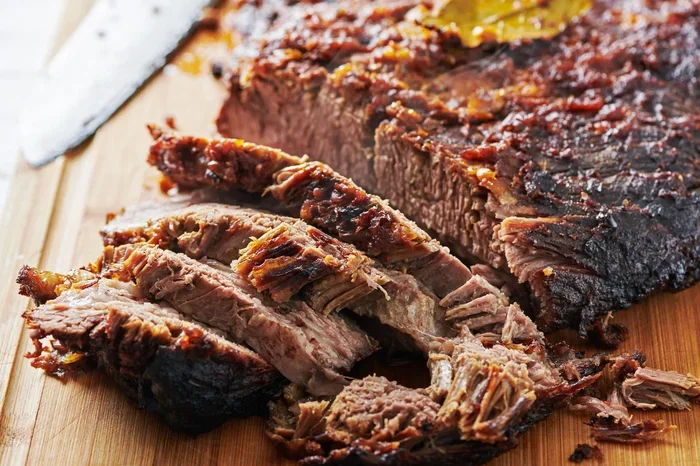
Always slice against the grain. Look at the muscle fibers and cut perpendicular to them. This shortens the fibers, making each piece tender and easy to chew. For the flat cut, slice about ¼ inch thick. For the point, you can slice thicker or even chop it into shreds. Use a sharp carving knife and a gentle sawing motion.
Serving Suggestions
Serve the slices with a spoonful of the braising liquid or a simple gravy. Classic sides include mashed potatoes, roasted carrots, and buttered egg noodles. A bright green salad cuts through the richness. For a true Jewish deli experience, serve it with rye bread, mustard, and pickles.
Expert Tips, Common Mistakes, and Flavor Twists
Even the best cooks make mistakes. Learning from them saves time and prevents a dry brisket. Here are some insights to elevate your oven brisket game.
Common Mistakes to Avoid
- Cooking at too high a temperature: High heat dries out the meat. Stick to 300°F.
- Skipping the sear: Searing builds a flavor foundation. Do not rush this step.
- Not resting the meat: Cutting too soon releases all the juices.
- Over-seasoning with salt: The onion soup mix already contains salt. Taste before adding more.
- Using a small pan: The brisket should fit comfortably with room for liquid. Crowding leads to steaming instead of braising.
Expert Insights for Perfect Brisket
Many experienced cooks swear by the “low and slow” method. They say that a brisket is done when it is tender, not when the clock says so. Use a meat thermometer. If the probe slides in easily and the meat feels soft, it is ready. Some people add a small amount of liquid smoke for a hint of barbecue flavor, but it is entirely optional. The natural juices from the onions and broth create plenty of depth.
Flavor Twists and Variations
Once you master the classic recipe, you can get creative. Try adding a tablespoon of brown sugar for a caramelized glaze. A splash of apple cider vinegar brightens the flavor. For a spicy kick, add a teaspoon of smoked paprika or a pinch of cayenne. Some cooks wrap the brisket in a foil tent halfway through cooking to speed things up, but leaving it uncovered for the last hour gives a nicer crust.
Storing and Reheating Leftovers
Leftover brisket makes incredible sandwiches the next day. Store the sliced meat in an airtight container with some of the braising liquid. It keeps in the refrigerator for up to 4 days. To reheat, place the meat in a baking dish, add a splash of broth, and cover with foil. Warm it in a 325°F oven for 20 to 30 minutes. This keeps the meat moist and tender. Freezing is also an option. Wrap the brisket tightly in plastic wrap and foil, then freeze for up to 3 months. Thaw overnight in the refrigerator before reheating.
Conclusion
Cooking a perfect Jewish brisket in the oven is easier than you think. The key is patience, the right temperature, and simple, quality ingredients. By following the steps in this guide, you will serve a brisket that is tender, juicy, and full of flavor. Remember to let it rest, slice against the grain, and enjoy the process. Whether it is for a holiday dinner or a cozy family meal, this oven brisket will become a tradition you look forward to every time. So preheat your oven, grab your Dutch oven, and get ready to create a masterpiece that will have everyone asking for the recipe.
Frequently Asked Questions
Can I cook Jewish brisket in a different oven temperature?
Yes, you can adjust the temperature, but the low-and-slow method at 300°F gives the best results. If you increase the heat to 350°F, reduce the cooking time by about 30 minutes, but keep an eye on the internal temperature to avoid drying out the meat.
What is the best internal temperature for a cooked brisket?
Aim for an internal temperature of 200°F to 205°F. At this range, the connective tissue has fully broken down, and the meat will be tender and juicy. Use a reliable meat thermometer inserted into the thickest part of the brisket.
Can I use a different braising liquid instead of beef broth?
Absolutely. Chicken broth, vegetable broth, or even a mix of red wine and water work well. The key is to have enough liquid to come halfway up the meat and to add aromatics like onions, carrots, and celery for flavor.
How do I know when the brisket is done if I do not have a meat thermometer?
You can check by inserting a fork into the thickest part of the meat. If it twists easily and the meat feels soft, it is done. Another sign is when the brisket has shrunk and pulled away from the fat layer on top.
Can I cook Jewish brisket in a slow cooker instead of the oven?
Yes, you can adapt the recipe for a slow cooker. Sear the brisket first, then place it in the slow cooker with the same aromatics and braising liquid. Cook on low for 8 to 10 hours or on high for 5 to 6 hours. The oven method gives a slightly richer crust, but the slow cooker is a great hands-off alternative.
What is the best way to reheat leftover brisket without drying it out?
Reheat in a covered baking dish with a splash of beef broth or water. Use a low oven temperature of 325°F and warm for 20 to 30 minutes. The foil tent helps trap steam and keeps the meat moist. Avoid microwaving if possible, as it can make the brisket tough.