How To Cook Salmon Fillet In Oven With Foil Perfectly
Cooking salmon fillet in oven with foil is the easiest way to get moist, tender, and flavorful fish with almost no cleanup. This method locks in moisture, keeps the fillet intact, and lets you add herbs, lemon, and vegetables right in the packet. Whether you are a beginner or a busy weeknight cook, this simple oven-baked salmon recipe will become your go-to dinner solution. Follow our guide for perfect salmon fillet cooking time and temperature every single time.
There is something magical about how to cook salmon fillet in oven with foil. It is simple, fast, and produces results that taste like they came from a fancy restaurant. You do not need fancy equipment or years of cooking experience. Just a piece of salmon, some foil, and your oven, and you are ready to go.
Salmon is one of the most popular fish in the world. It is rich in omega-3 fatty acids, high in protein, and incredibly versatile. Whether you are cooking for two or feeding a whole family, oven-baked salmon fits the bill perfectly. And when you cook it in foil, you get an even better result. The foil traps moisture, keeps the fish tender, and lets you steam vegetables alongside the salmon for a complete meal in one pan.
If you have ever struggled with dry, overcooked salmon before, this method will change everything. Foil-baked salmon stays juicy, flaky, and full of flavor. It is hands down the best way to cook salmon fillets at home. Let us walk through everything you need to know, from ingredients to the final bite.
Key Takeaways
- Foil baking keeps salmon moist: The foil traps steam and prevents the fish from drying out during cooking.
- Simple preparation is key: You only need a few ingredients, foil, and an oven to make restaurant-quality salmon at home.
- Temperature and timing matter: Baking at 400°F for 12-15 minutes delivers perfectly cooked fillets every time.
- Endless flavor variations: From lemon herb to garlic butter, foil packets let you customize flavors easily.
- Minimal cleanup required: The foil catches all juices and makes cleanup a breeze.
- Healthy and satisfying: Oven-baked salmon is packed with omega-3s and protein, making it a nutritious dinner choice.
- Works for any skill level: Even complete beginners can nail this method with confidence.
📑 Table of Contents
- Why Cooking Salmon In Foil Is The Best Method
- What You Will Need: Ingredients And Tools
- Step-By-Step Guide To Foil-Baked Salmon
- Perfect Temperature And Timing Guide
- Delicious Foil Salmon Variations
- Expert Tips For Perfect Salmon Every Time
- Serving Suggestions And Pairing Ideas
- Storing And Reheating Leftover Salmon
- Frequently Asked Questions
- Final Thoughts On Foil-Baked Salmon
Why Cooking Salmon In Foil Is The Best Method
You might wonder why foil matters so much when baking salmon. Can you just put the fillet directly on a baking sheet? Yes, you can. But foil creates a little steaming environment that makes a huge difference. Think of it like a mini oven inside your oven.
Here is why foil packet salmon works so well:
- Moisture stays locked in: The foil seals in steam, which keeps the salmon from drying out. This is especially helpful for thinner fillets that can overcook quickly.
- Even cooking: The foil distributes heat around the fish more evenly. You get consistent doneness from edge to center.
- Flavor infusion: When you add herbs, lemon slices, garlic, or vegetables to the foil packet, the steam carries those flavors deep into the fish. The salmon absorbs everything beautifully.
- Easy cleanup: All the juices and oils stay inside the foil. You just throw it away when you are done. No scrubbing baked-on fish off a pan.
- Versatility: You can cook salmon with vegetables, rice, or sauces right in the packet. It is a one-pan wonder that saves time and effort.
Many home cooks swear by this method because it removes almost all the guesswork. You set the temperature, set the timer, and let the oven do the work. The result is restaurant-quality salmon with very little effort.
Foil vs. Parchment Paper
Some people ask about using parchment paper instead of foil. Both work for baking salmon. Foil is more durable and holds heat better, which creates a slightly steamier environment. Parchment paper is a great eco-friendly alternative and works well too. The key is to wrap it tightly so the steam stays trapped. Either option will give you excellent results for your baked salmon recipe.
What You Will Need: Ingredients And Tools
Before you start, gather everything you need. Having all your ingredients and tools ready makes the process smooth and enjoyable. This is not a complicated recipe. You probably already have most of these items in your kitchen.
Ingredients For Basic Foil-Baked Salmon
- Salmon fillets: Fresh or thawed skin-on or skinless fillets work great. Aim for pieces about 6 ounces each for even cooking.
- Olive oil: A tablespoon or two helps the seasoning stick and keeps the fish moist.
- Lemon: Fresh lemon slices or juice add brightness and cut through the richness of the salmon.
- Garlic: Minced fresh garlic or garlic powder adds depth of flavor.
- Fresh herbs: Dill, parsley, or thyme are all wonderful choices. Fresh herbs make a big difference.
- Salt and black pepper: The basics that bring out the natural flavor of the fish.
- Butter (optional): A small pat of butter on top of each fillet adds richness and a beautiful finish.
Tools You Will Need
- Aluminum foil: Heavy-duty foil works best because it holds up better in the oven.
- A baking sheet: Something flat to hold the foil packets.
- A sharp knife: For slicing lemons and chopping herbs.
- A mixing bowl (optional): For tossing vegetables or mixing a simple glaze.
- A meat thermometer: This is the most important tool for checking salmon internal temperature. More on that below.
Once you have everything ready, you are just minutes away from an amazing meal. The simplicity of this easy salmon dinner is what makes it so appealing for busy weeknights and relaxed weekends alike.
Step-By-Step Guide To Foil-Baked Salmon
Now let us get into the actual cooking process. Follow these steps carefully, and you will have perfectly cooked salmon fillet every single time. This method works whether you are using a standard oven or a convection oven.
Step One: Preheat Your Oven
Set your oven to 400°F (200°C). This is the sweet spot for salmon fillet oven temperature. It is hot enough to create a slight sear on the outside while keeping the inside moist and tender. If your oven runs hot, you can drop it to 375°F, but 400°F is the standard recommendation for foil-baked salmon.
While the oven heats up, prepare your salmon. Pat the fillets dry with a paper towel. This helps the skin crisp up if you are keeping the skin on. It also helps the seasoning stick better.
Step Two: Prepare The Foil Packet
Tear off a large piece of aluminum foil. You want enough to wrap around each fillet completely with room to fold the edges. A sheet about 18 inches long works well for two fillets.
Lightly grease the foil with olive oil or butter. This prevents the salmon from sticking and makes cleanup even easier.
Step Three: Season The Salmon
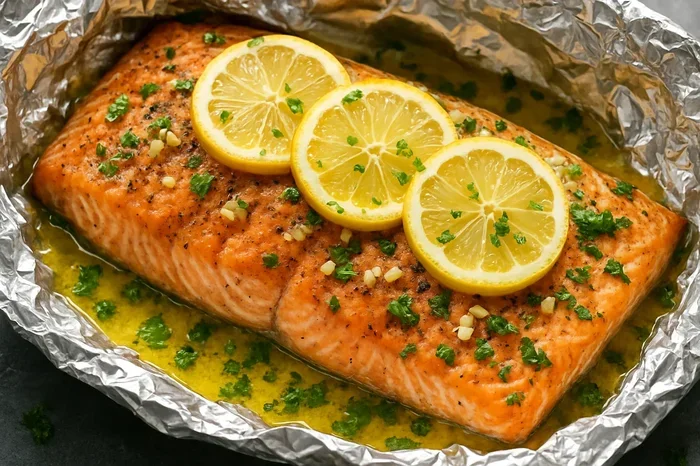
Place the salmon fillets in the center of the foil. Drizzle with olive oil and season generously with salt, pepper, minced garlic, and fresh herbs. Add lemon slices on top and around the fish.
If you are adding vegetables, place them around the salmon. Asparagus, zucchini, cherry tomatoes, and bell peppers all work wonderfully. Toss them in a little olive oil and seasoning first so they cook evenly.
For extra flavor, add a small pat of butter on top of each fillet. The butter melts in the steam and creates a rich, silky finish that elevates the entire dish.
Step Four: Seal The Foil Packet
Fold the foil over the salmon and vegetables. Crimp the edges tightly to create a sealed packet. You want the steam trapped inside, so make sure there are no gaps. You can fold the edges several times to ensure a tight seal.
Pro tip: Do not flatten the packet completely. Leave some space inside so the steam can circulate around the fish. This ensures even cooking and prevents the fillet from getting soggy.
Step Five: Bake And Check For Doneness
Place the foil packets on a baking sheet and put them in the preheated oven. Bake for 12 to 15 minutes for standard-thickness fillets. Thicker fillets may need an extra 2-3 minutes.
The salmon fillet cooking time depends on the thickness of the fish and your desired level of doneness. Here is a quick guide:
- 12 minutes: Slightly translucent center (medium-rare). Very moist and buttery.
- 14 minutes: Just opaque throughout (medium). This is the most popular level of doneness.
- 15-16 minutes: Fully opaque and flaky (well-done). Still moist if you did not overcook it.
The best way to check doneness is with a meat thermometer. Insert it into the thickest part of the fillet. The ideal salmon internal temperature is 145°F (63°C). The fish will continue to cook slightly after you remove it from the oven, so pulling it at 140°F gives you a perfect medium result.
Step Six: Serve Immediately
Carefully open the foil packet. Watch out for the steam. Transfer the salmon and vegetables to a plate. The fish should be moist, flaky, and beautifully cooked. Serve it over rice, with a side of roasted potatoes, or enjoy it on its own with a fresh salad.
Garnish with fresh dill or parsley and a squeeze of lemon. This healthy salmon recipe is ready to impress anyone at your table.
Perfect Temperature And Timing Guide
Getting the temperature and timing right is the most important part of how to cook salmon fillet in oven with foil. Too hot and the outside overcooks before the inside is done. Too cool and you risk the fish staying raw in the center. Let us break down the numbers so you never have to guess again.
Recommended Oven Temperature
The standard salmon fillet oven temperature is 400°F. This works for most fillets regardless of thickness. Here are some adjustments based on your situation:
- Thin fillets (less than 1 inch): Use 400°F and check at 10 minutes. Thin pieces cook faster and can dry out quickly.
- Standard fillets (1 to 1.5 inches): 400°F for 12-15 minutes is perfect.
- Thick center-cut fillets (over 1.5 inches): 400°F for 15-18 minutes. You may need to add a few extra minutes.
- Convection ovens: Reduce temperature by 25°F and check 2 minutes earlier. Convection fans circulate heat more efficiently.
Salmon Internal Temperature Guide
Using a thermometer takes all the guesswork out of cooking salmon. Here is what different temperatures mean for your fillet:
- 120°F: Very rare. Translucent and raw-looking in the center. Not recommended for most people.
- 125-130°F: Medium-rare. Slightly translucent center with a buttery, silky texture. This is how many chefs prefer their salmon.
- 135-140°F: Medium. Opaque and flaky but still moist. The most widely recommended doneness level.
- 145°F: Well-done. Fully opaque and firm. Safe according to USDA guidelines but can be slightly drier.
Remember that carryover cooking happens after you remove the salmon from the oven. The internal temperature will rise 3-5 degrees as the fish rests. Pull it off the heat a few degrees below your target for the best result.
Quick Reference Chart
Here is a handy reference for your next oven roasted salmon session:
- 400°F for 12 min: Thin fillet, medium-rare
- 400°F for 14 min: Standard fillet, medium
- 400°F for 16 min: Thick fillet, medium-well
- 375°F for 15-18 min: Any thickness, gentle and even cooking
Keep this chart handy the first few times you try this method. After a couple of tries, you will know exactly how long to bake your salmon without even thinking about it.
Delicious Foil Salmon Variations
One of the best things about cooking salmon in foil is how easy it is to switch up the flavors. You can create a completely different dish every time without changing the basic method. Here are some delicious foil salmon recipe ideas you will love.
Lemon Herb Salmon
This is the classic lemon herb salmon preparation. Use fresh dill, parsley, and thyme. Add lemon slices and a drizzle of olive oil. The citrus and herbs create a bright, clean flavor that pairs perfectly with the rich salmon. This variation is light, healthy, and incredibly satisfying.
Garlic Butter Salmon
Melt a tablespoon of butter with minced garlic and a pinch of red pepper flakes. Spoon this mixture over each fillet before sealing the foil. The garlic butter melts into the fish as it cooks, creating an indulgent, restaurant-style flavor. This is my personal favorite for date night dinners.
Asian-Inspired Salmon
For something different, try an Asian twist. Mix soy sauce, sesame oil, rice vinegar, and a touch of honey. Add sliced ginger and scallions to the foil packet. Top with sesame seeds after baking. This healthy salmon recipe brings bold, savory flavors that pair beautifully with steamed rice and stir-fried vegetables.
Mediterranean Salmon With Vegetables
Add cherry tomatoes, kalamata olives, capers, red onion, and feta cheese to your foil packet. Drizzle with olive oil and sprinkle with oregano. The vegetables roast alongside the salmon and soak up all the juices. Serve with crusty bread for a Mediterranean feast that feels like a vacation on a plate.
Honey Mustard Glazed Salmon
Mix Dijon mustard, honey, and a splash of apple cider vinegar. Brush this glaze over the salmon before sealing the foil. The sweetness of the honey balances the tang of the mustard perfectly. This creates a beautiful caramelized finish that kids and adults both love.
Each variation takes the same basic approach and adds your own creative twist. This is what makes foil packet salmon so versatile. You can adapt it to any cuisine or flavor profile you are craving.
Expert Tips For Perfect Salmon Every Time
Even with a great recipe, small mistakes can affect your results. Here are some expert tips that will help you nail how to cook salmon fillet in oven with foil perfectly every single time.
Common Mistakes To Avoid
- Overcooking the salmon: This is the number one mistake. Salmon dries out quickly once it passes the ideal temperature. Use a thermometer and pull it off the heat early.
- Skipping the dry pat: If you do not pat the fillet dry before seasoning, the skin will not crisp and the seasoning will slide off. Always start with a dry surface.
- Not sealing the foil tightly: A loose foil packet lets steam escape, which leads to drier salmon. Take the extra minute to crimp the edges properly.
- Using frozen salmon without proper thawing: If you are using frozen fillets, thaw them in the refrigerator overnight. Cooking frozen salmon in foil leads to uneven results.
- Crowding the baking sheet: Give each foil packet room to breathe. Overcrowding blocks heat circulation and causes uneven cooking.
Quick Tips For Better Results
- Bring salmon to room temperature before cooking. Take it out of the fridge 15-20 minutes before it goes in the oven. This promotes even cooking throughout the fillet.
- Place the salmon skin-side down if you want crispy skin. The foil will still keep it moist while the skin gets slightly crispy from the heat.
- Add a splash of white wine or broth to the foil packet for extra moisture and depth of flavor. This creates a beautiful sauce inside the packet.
- Let the salmon rest for 3-5 minutes after opening the foil. This allows the juices to redistribute, making every bite tender and flavorful.
- Use quality salmon: Wild-caught salmon has a richer flavor and better texture than farmed options. It makes a noticeable difference in your final dish.
How To Tell If Salmon Is Done
There are three reliable ways to check if your oven-baked salmon is done. First, use a meat thermometer. The internal temperature should read 145°F at the thickest point. Second, use the fork test. Gently press the top of the fillet with a fork. If it flakes easily and separates into tender pieces, it is done. Third, look at the color. Fully cooked salmon is opaque pink throughout with no translucent or raw-looking areas in the center.
Trust your senses and your thermometer together. With a little practice, you will know exactly when your salmon is perfect without even checking.
Serving Suggestions And Pairing Ideas
Foil-baked salmon pairs wonderfully with a variety of sides. Here are some ideas to build a complete meal around your perfectly cooked salmon.
- Rice: Steamed jasmine rice or brown rice soaks up the salmon juices beautifully.
- Roasted vegetables: Broccoli, Brussels sprouts, or sweet potatoes make hearty, healthy companions.
- Salad: A fresh green salad with a light vinaigrette balances the richness of the salmon perfectly.
- Quinoa or couscous: These grains add a nutty flavor and fluffy texture that complements the fish.
- Mashed potatoes: Creamy mashed potatoes are a classic pairing that never disappoints.
- Crusty bread: Use it to soak up the delicious juices from the foil packet. Do not waste a single drop.
For a complete weeknight salmon dinner, keep it simple. A piece of foil-baked salmon, a side of roasted asparagus, and some rice is all you need. It is healthy, delicious, and ready in under 30 minutes total.
Storing And Reheating Leftover Salmon
If you have leftover foil-baked salmon, store it properly to enjoy it the next day. Place the cooled salmon in an airtight container and refrigerate within two hours. Properly stored cooked salmon keeps well in the fridge for up to three days.
When reheating, be gentle. The microwave can dry out salmon quickly. Instead, warm it in a pan on the stove over low heat with a splash of broth or water. Cover the pan to trap moisture. You can also reheat it in the oven at 275°F for about 10 minutes. This keeps the fish moist and preserves its flaky texture.
Avoid reheating salmon more than once. Each reheating cycle further dries out the fish. Plan your portions wisely so you only reheat what you will eat.
Frequently Asked Questions
Can I use frozen salmon fillets for foil baking?
Yes, you can, but it is best to thaw the salmon first for even cooking. Place the frozen fillets in the refrigerator overnight to thaw. If you are in a hurry, you can use the cold water method by sealing the fish in a bag and submerging it in cold water for about 30 minutes. Cooking frozen salmon directly in foil can lead to uneven results with some parts overcooked and others still frozen.
What is the best salmon internal temperature for moist results?
The ideal internal temperature is 145°F according to food safety guidelines. However, many chefs prefer to pull salmon at 130-135°F for a moister, more buttery texture. The carryover cooking will bring it up to the safe temperature. Using a meat thermometer is the most reliable way to get this right every time.
Can I cook salmon with the skin on in foil?
Absolutely. Cooking salmon skin-side down in foil actually helps keep the fillet moist. The skin acts as a natural barrier and protects the flesh. If you want crispy skin, you can finish the salmon under the broiler for 1-2 minutes after removing it from the foil. This gives you the best of both worlds: moist fish and crispy skin.
How long can I keep foil-baked salmon in the refrigerator?
Cooked salmon stays fresh in the refrigerator for up to three days when stored in an airtight container. Make sure it has cooled to room temperature before sealing it. Always check for any off smells or slimy texture before reheating and eating leftovers. When in doubt, throw it out.
What vegetables work best cooked alongside salmon in foil?
Vegetables with similar cooking times work best. Asparagus, zucchini, bell peppers, cherry tomatoes, and broccoli all roast beautifully alongside salmon at 400°F. Avoid vegetables that take much longer to cook, like carrots or potatoes, unless you cut them into very small pieces. Dense vegetables can remain crunchy while the salmon finishes cooking.
Is foil-baked salmon healthy?
Yes, foil-baked salmon is one of the healthiest cooking methods available. Salmon is naturally rich in omega-3 fatty acids, high-quality protein, and essential vitamins like B12 and D. Baking in foil requires no added oil beyond what you use for seasoning. It avoids the unhealthy fats associated with frying and preserves more of the fish’s natural nutrients. It is an excellent choice for a balanced, healthy dinner recipe.
Final Thoughts On Foil-Baked Salmon
How to cook salmon fillet in oven with foil is truly one of the simplest and most rewarding cooking techniques you can master. It delivers consistently moist, flavorful results with almost no effort. Whether you are preparing a quick weeknight dinner or impressing guests at a weekend gathering, this method never lets you down.
The beauty of foil-baked salmon lies in its simplicity. You do not need fancy techniques or expensive equipment. Just good salmon, a few fresh ingredients, aluminum foil, and a hot oven. The foil does the hard work for you, trapping steam and flavor in a perfectly sealed packet.
Once you try this method a few times, you will wonder how you ever cooked salmon any other way. The moist, flaky, perfectly seasoned results will become your new standard. Experiment with different seasonings and vegetable combinations to keep things interesting. Try the lemon herb version on a quiet Tuesday night and the garlic butter version when you want something indulgent.
Oven-baked salmon in foil is more than just a recipe. It is a reliable, healthy, and delicious way to prepare one of the world’s most nutritious fish. Keep this guide bookmarked, share it with friends, and watch as your confidence in the kitchen grows with every batch. You have everything you need to make perfect salmon fillet tonight. Get in the kitchen and give it a try. Your taste buds will thank you.