How Long To Cook Turkey Breast In Oven At 350 Degrees
Cooking turkey breast in the oven at 350°F is the simplest and most reliable method for a tender, juicy result. Most turkey breasts take between 60 and 90 minutes depending on size, whether they are bone-in or boneless, and how you prepare them. Using a meat thermometer to check the internal temperature is the single best way to ensure your turkey breast is perfectly cooked through. This guide covers everything you need to know about timing, temperature, seasoning, and serving.
How Long To Cook Turkey Breast In Oven At 350 is one of the most searched cooking questions every holiday season and beyond. Whether you are preparing a simple weeknight dinner or a festive feast, knowing the right cooking time and oven temperature makes all the difference. This turkey cooking guide gives you clear, practical answers so you can serve a juicy turkey breast every single time.
Roasting a turkey breast in the oven is one of the easiest ways to prepare this popular protein. Unlike a whole bird, a breast portion cooks faster and is much more forgiving. You do not need to be a seasoned chef to get great results. With the right oven temperature, a basic understanding of timing, and a few simple tips, your roasted turkey breast will turn out moist, flavorful, and beautifully golden.
How Long To Cook Turkey Breast In Oven At 350 depends on several factors, including the size of the breast, whether it has bones, and how you season it. In this article, we walk you through every step of the process. You will learn exact timing guidelines, temperature checks, preparation tricks, and serving ideas. By the end, you will feel confident enough to bake a turkey breast like a pro.
Key Takeaways
- Standard Cooking Time: A whole turkey breast at 350°F typically takes 60 to 90 minutes, depending on weight and whether it is bone-in or boneless.
- Internal Temperature Matters: The USDA recommends an internal temperature of 165°F for safe consumption.
- Bone-In Takes Longer: Bone-in turkey breast generally needs 15 to 25 extra minutes compared to boneless cuts.
- Resting Is Essential: Letting the turkey breast rest for 10 to 15 minutes after baking keeps the juices locked in.
- Brining Adds Moisture: A simple brine or dry rub before baking dramatically improves flavor and tenderness.
- Size Changes Everything: Smaller portions may be done in 45 minutes, while larger whole breasts can take up to two hours.
- Leftovers Store Well: Cooked turkey breast stays fresh in the fridge for 3 to 4 days and freezes for up to 3 months.
📑 Table of Contents
Understanding Turkey Breast Cooking Times At 350°F
The oven temperature of 350°F is widely considered the sweet spot for roasting turkey breast. It cooks the meat evenly without drying it out. Most turkey breast recipes rely on this temperature because it balances speed with quality. The heat surrounds the meat gently, allowing the inside to cook through while the outside turns golden brown turkey perfection.
Why 350°F Is The Ideal Temperature
At 350°F, the oven-baked turkey cooks at a moderate pace. This means the outer layers do not burn before the inner layers are done. Lower temperatures like 325°F take longer but produce very tender results. Higher temperatures like 400°F cook faster but carry a bigger risk of drying out the meat. 350°F hits the perfect middle ground for most home cooks.
This temperature also works well for both boneless turkey breast and bone-in turkey breast. The bones in a bone-in cut act as natural insulation, so the meat stays juicy longer. Boneless cuts cook faster and are easier to slice, which makes them popular for everyday meals.
How Breast Size Affects Cooking Time
The turkey breast size is the biggest variable in your cooking time. A small boneless breast weighing around 1 to 2 pounds may be done in 45 to 60 minutes. A larger boneless breast of 3 to 4 pounds typically needs 60 to 90 minutes. A whole bone-in breast can take anywhere from 75 minutes to two hours or more.
Here is a simple breakdown to help you plan:
- Boneless, 1 to 2 pounds: About 45 to 60 minutes
- Boneless, 3 to 4 pounds: About 60 to 90 minutes
- Bone-in, 2 to 3 pounds: About 75 to 105 minutes
- Bone-in, 4 to 6 pounds: About 105 to 135 minutes
- Whole bone-in breast, over 6 pounds: Up to 150 minutes or more
These times are approximate. Always use a meat thermometer to confirm doneness. The internal temperature of the thickest part of the breast should reach 165°F for safe eating.
How Long To Cook Turkey Breast In Oven At 350
How Long To Cook Turkey Breast In Oven At 350 is the central question this guide answers in detail. The answer depends on the type of cut you are preparing, the weight of the meat, and your desired level of doneness. Below we break down the timing for each common type of turkey breast portions.
Boneless Turkey Breast Cooking Time
A boneless turkey breast is the fastest option to roast at 350°F. Because there is no bone slowing down the heat transfer, the meat cooks evenly and relatively quickly. For a boneless breast that weighs between 1 and 2 pounds, plan on about 45 to 60 minutes of total cooking time.
For a larger boneless breast between 3 and 4 pounds, expect the bake turkey breast process to take 60 to 90 minutes. These cuts are great for families who want easy slicing and shorter preparation. You can also butterfly a whole breast to create a thinner cut that cooks even faster.
Bone-In Turkey Breast Cooking Time
A bone-in turkey breast takes longer because the bone insulates the surrounding meat. The heat has to penetrate through the bone before the meat reaches the right temperature. For a bone-in breast weighing 2 to 3 pounds, you should budget about 75 to 105 minutes at 350°F.
Larger bone-in breasts weighing 4 to 6 pounds may need 105 to 135 minutes. If you are roasting a very large bone-in breast over 6 pounds, it could take up to 150 minutes or slightly longer. The bone adds wonderful flavor, but it does mean you need to be patient and plan ahead.
Portion-Sized Turkey Breast Timing
Individual portion-sized turkey breast pieces, such as thin cutlets or small medallions, cook very quickly at 350°F. A single portion that is about half an inch thick may only need 20 to 25 minutes. Thicker portions around one inch thick will take 30 to 40 minutes.
These smaller cuts are perfect for quick weeknight dinners. They pair well with roasted vegetables, mashed potatoes, or a fresh salad. Because they cook fast, it is even more important to check the internal temperature early and often to avoid overcooking.
Step-By-Step Guide To Baking Turkey Breast
Now that you understand the timing, let us walk through the actual process of preparing and baking a turkey breast. Following these steps will help you achieve consistent, delicious results every time you use this turkey breast recipe.
Preparing The Turkey Breast
Start by removing the turkey breast from the refrigerator about 30 minutes before cooking. Letting it come to room temperature helps it cook more evenly. Pat the meat dry with paper towels. This step is important because surface moisture can steam the meat instead of allowing it to roast properly.
If you are using a bone-in breast, check for any excess fat or skin that you want to trim. Leaving a thin layer of fat helps keep the meat moist during roasting. For a boneless turkey breast, you can simply place it in a baking dish or on a lined sheet pan.
Seasoning And Flavor Options
Seasoning the turkey breast is where you can get creative. A simple blend of olive oil, salt, black pepper, garlic powder, and dried herbs like thyme or rosemary works beautifully. You can also add a squeeze of lemon juice or a drizzle of melted butter for extra richness.
For a deeper flavor, consider brining the breast overnight. A wet brine of water, salt, sugar, and spices keeps the meat incredibly juicy. A dry brine with just salt and herbs also works well and requires less effort. Both methods are popular in many turkey breast tips collections and make a noticeable difference in the final dish.
Baking Process And Timing
Preheat your oven to 350°F before placing the turkey breast inside. This ensures the oven reaches the right oven temperature while you finish preparing the meat. Place the breast in a baking dish or on a rimmed sheet pan lined with foil or parchment for easy cleanup.
Cover the dish loosely with aluminum foil for the first half of the cooking time. This traps moisture and helps the meat stay tender. Remove the foil during the last 15 to 20 minutes to allow the top to become golden brown turkey skin. Baste the breast once or twice with its own juices for extra flavor.
Internal Temperature And Doneness
Knowing when your roasted turkey breast is done is the most important part of the entire process. The internal temperature is the only reliable indicator of doneness. Visual cues like color can be misleading, and relying on a timer alone often leads to overcooked or undercooked meat.
Using A Meat Thermometer
A meat thermometer is the single best tool you can own for roasting turkey breast. Insert it into the thickest part of the breast, making sure it does not touch the bone. The reading should show 165°F for fully cooked, safe-to-eat turkey breast.
For an even juicier result, some cooks pull the breast off the heat when the internal temperature reaches 160°F. The carryover cooking effect will raise the temperature by a few degrees as the meat rests. This prevents the meat from drying out while still meeting food safety guidelines.
Safe Temperature For Turkey Breast
The USDA recommends cooking all poultry to an internal temperature of 165°F. This applies to bone-in turkey breast and boneless turkey breast alike. Always check the temperature in at least two spots, especially if the breast is uneven in thickness.
If you are cooking stuffed turkey breast, be extra careful. The stuffing must also reach 165°F for it to be safe. Using a separate thermometer for the stuffing is a smart turkey breast tip that many home cooks overlook.
Tips For Juicy And Flavorful Turkey Breast
Getting a juicy turkey breast every time comes down to a few key practices. These turkey breast tips will help you avoid dry meat and bring out the best flavor in every bite.
Brining For Moisture
Brining is one of the most effective ways to guarantee a moist oven-baked turkey. A simple wet brine of water, kosher salt, brown sugar, and aromatics like bay leaves and peppercorns works wonders. Submerge the breast for at least 4 hours or overnight in the refrigerator.
If you do not have time for a wet brine, try a dry brine. Simply coat the breast generously with salt and let it sit uncovered in the refrigerator for 4 to 12 hours. The salt draws out moisture, which then gets reabsorbed into the meat, creating a tender and flavorful result.
Resting The Meat After Cooking
Resting the turkey meat after it comes out of the oven is just as important as the cooking itself. Let the breast sit for 10 to 15 minutes before slicing. This allows the juices to redistribute throughout the meat. If you cut too soon, the juices run out and the meat becomes dry.
Cover the resting breast loosely with foil to keep it warm. You can use the resting juices from the pan to make a simple pan sauce or drizzle over the sliced meat for extra flavor.
Common Mistakes To Avoid
Even experienced cooks sometimes make mistakes when roasting turkey breast. Here are the most common ones to watch out for:
- Skipping the meat thermometer: Guessing doneness leads to uneven results every time.
- Cooking from cold: A fridge-cold breast cooks unevenly. Always let it warm up for 30 minutes first.
- Over-seasoning the outside: Too much salt on the surface can draw out moisture and create a tough exterior.
- Opening the oven door too often: Every time you open the door, the temperature drops and the cooking time increases.
- Slicing too early: Cutting the meat right after it comes out of the oven wastes all those precious juices.
- Ignoring carryover cooking: The meat continues cooking after removal, so pull it off early and let it rest.
Serving And Storing Leftover Turkey Breast
A perfectly roasted turkey breast dinner does not have to end when the meal is over. Leftover turkey is one of the most versatile ingredients in the kitchen. Knowing how to serve and store it properly makes the most of your cooking effort.
Best Ways To Serve Roasted Turkey Breast
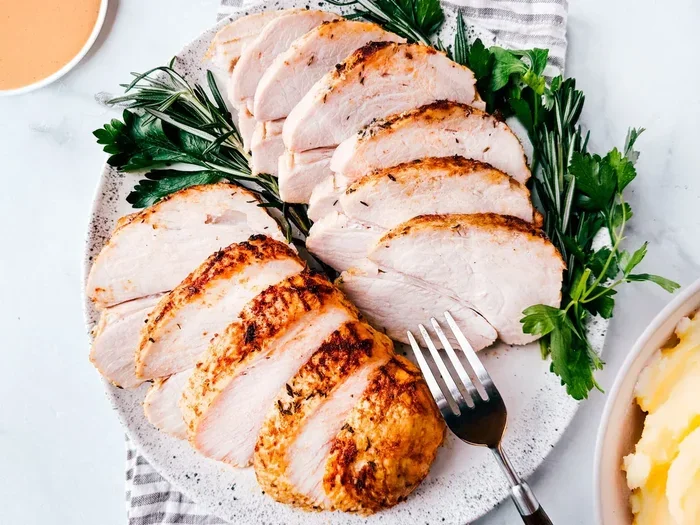
Sliced roasted turkey breast pairs with almost anything. Classic sides include mashed potatoes, cranberry sauce, green beans, and dinner rolls. For a lighter meal, serve it over a fresh green salad or in warm tortillas with salsa and avocado.
Turkey breast also makes fantastic sandwiches the next day. Layer thin slices on crusty bread with lettuce, tomato, avocado, and your favorite dressing. You can chop leftover turkey and toss it into soups, casseroles, or stir-fries for a quick and delicious meal.
How To Store And Reheat Leftovers
Store leftover turkey breast in an airtight container in the refrigerator within two hours of cooking. It stays fresh for 3 to 4 days. For longer storage, wrap the meat tightly in plastic wrap and freezer paper, then freeze for up to 3 months.
To reheat, place slices in a baking dish, cover with foil, and warm in a 325°F oven for 15 to 20 minutes. Adding a splash of broth or turkey gravy helps keep the meat moist. Avoid reheating in the microwave for long periods, as it can dry out the breast quickly.
Conclusion
How Long To Cook Turkey Breast In Oven At 350 is a question with a clear and achievable answer once you understand the variables at play. A typical turkey breast takes between 60 and 90 minutes at 350°F, with bone-in cuts taking a bit longer than boneless ones. The key to success lies in using a meat thermometer, letting the meat rest properly, and choosing quality turkey breast preparation methods like brining and thoughtful seasoning.
Whether you are cooking for a holiday gathering or a simple family dinner, this turkey cooking guide gives you everything you need. Follow the timing guidelines, pay attention to the internal temperature, and trust the process. Soon you will be serving juicy turkey breast that everyone at the table will love. Practice these turkey breast tips a few times and you will never second-guess your oven-baked turkey again.
Frequently Asked Questions
Can I Cook Turkey Breast At 325°F Instead Of 350°F?
Yes, you can cook turkey breast at 325°F, but it will take longer. Lower oven temperature means slower cooking, so add about 15 to 20 minutes to the recommended time. The benefit is that the meat stays very moist and cooks evenly. Just be sure to check the internal temperature to confirm it reaches 165°F.
How Do I Know If My Turkey Breast Is Done Without A Thermometer?
The most reliable way without a meat thermometer is to pierce the thickest part of the breast. If the juices run clear and not pink, the meat is likely done. However, this method is not as accurate as using a thermometer. Always aim for an internal temperature of 165°F for safety.
Should I Cover Turkey Breast With Foil While Baking?
Covering the breast with foil for the first half of cooking helps trap moisture and keeps the meat tender. Remove the foil during the last 15 to 20 minutes to allow the outside to turn golden brown turkey and develop a nice texture. This two-step approach gives you the best of both worlds.
Can I Use A Frozen Turkey Breast In The Oven?
Yes, you can cook a frozen turkey breast, but it will take significantly longer. Add at least 50 percent more to the normal cooking time. Make sure the internal temperature reaches 165°F in the thickest part. For the best results, thaw the breast in the refrigerator overnight before baking.
What Is The Best Way To Reheat Leftover Turkey Breast?
The best method is to reheat in a 325°F oven with a splash of broth or gravy. Cover the slices with foil and warm for 15 to 20 minutes. This keeps the meat moist and prevents it from drying out. Avoid using the microwave for too long, as it can make the turkey tough and rubbery.
How Long Can I Store Cooked Turkey Breast In The Fridge?
Cooked turkey breast stays fresh in the refrigerator for 3 to 4 days when stored in an airtight container. For longer storage, wrap it well and freeze it for up to 3 months. Always reheat leftovers to an internal temperature of 165°F before serving to ensure food safety.