Can I Use Immersion Blender In Dutch Oven Safely Today
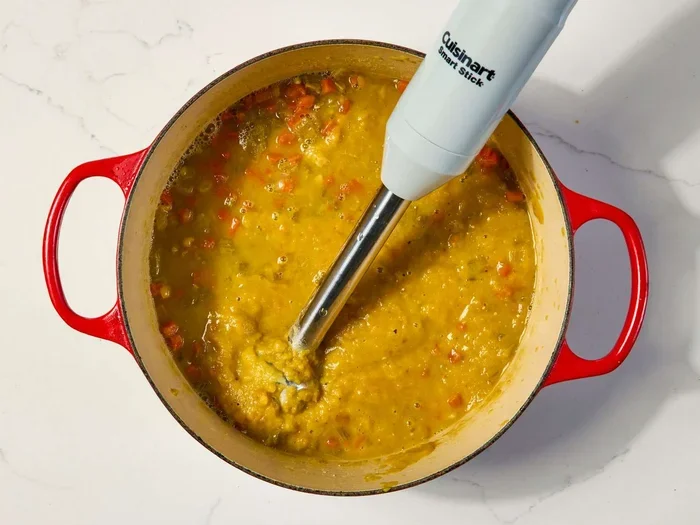
Yes, you can safely use an immersion blender in a dutch oven to blend hot soups and sauces without transferring them to another container. This simple kitchen hack saves time, reduces cleanup, and keeps your meals hot while you prepare them. Using a hand blender directly in your heavy pot is convenient, but you must follow a few key safety steps to avoid splashing or damaging your cookware.
This is a comprehensive guide about Can I Use Immersion Blender In Dutch Oven.
Key Takeaways
- Safe to use: Immersion blenders work well in dutch ovens when you follow basic safety rules.
- Saves time and cleanup: Blending directly in the pot eliminates extra dishes and transfers.
- Heat resistance matters: Make sure your dutch oven and blender are rated for hot liquids.
- Prep steps are key: Let soup cool slightly, fill the pot correctly, and keep the blender submerged.
- Common mistakes exist: Running the blender in air, overfilling the pot, or using a scratched pot can cause problems.
- Versatile tool: You can make soups, sauces, smoothies, and more right in your dutch oven.
- Know your equipment: Check both your hand blender and dutch oven for compatibility and wear.
[FEATURED_IMAGE_PLACEHOLDER]
Can I Use Immersion Blender In Dutch Oven Safely Today?
If you have ever stood over a hot pot of soup and wondered whether you could just blend it right there, you are not alone. The short answer is yes. You can use an immersion blender in a dutch oven safely, as long as you follow a few simple guidelines. This method has become a favorite among home cooks who want to save time and skip the extra dishes.
A dutch oven is a heavy, thick-walled pot that holds heat beautifully. It works great for soups, stews, and sauces. An immersion blender, also called a stick blender or hand blender, lets you puree ingredients right inside the pot. This combo means fewer pots to wash and a faster meal prep process.
In this article, we will walk through everything you need to know. We will cover safety steps, best practices, common mistakes, and expert tips. By the end, you will feel confident using your hand blender in your dutch oven every time you cook.
Why This Topic Matters
Many people worry about scratching their pot or causing a hot liquid splash. These concerns are valid. But with the right approach, blending hot soup in a dutch oven is both safe and efficient. Understanding how your tools work together helps you cook smarter and faster.
What Is an Immersion Blender and How Does It Work?
An immersion blender is a handheld kitchen appliance that lets you blend foods directly in the container they are in. Unlike a countertop blender, you do not need to transfer hot liquids. This makes it a go-to tool for soup recipes and sauce making.
The device has a long shaft with rotating blades at the bottom. You submerge the blades into the food and turn it on. The blades chop and mix ingredients until they reach your desired texture. Most models come with detachable blending wands that you can wash separately.
Key Parts of an Immersion Blender
- Motor housing: The handle with the power button and motor inside.
- Blending shaft: The long metal stick that connects the motor to the blades.
- Blade assembly: The rotating blades at the bottom that do the blending work.
- Detachable wand: Many models allow you to remove the shaft for easy cleaning.
Most immersion blenders are made with stainless steel shafts and blades. This makes them durable and safe for use in metal pots like dutch ovens. The motor housing is usually plastic or stainless steel and should never touch hot surfaces or liquid.
Is It Safe to Use an Immersion Blender in a Dutch Oven?
Using an immersion blender in a dutch oven is safe when done correctly. The key is understanding the limits of both tools and following basic precautions. A dutch oven is typically made of cast iron, enameled cast iron, or stainless steel. These materials are tough and can handle the vibration and contact from a hand blender.
However, safety depends on how you use the tool. You should never plunge the blender into a pot that is too full. You should also never run the blender above the liquid line. Hot liquids can splash and cause burns. Taking a few extra seconds to set up properly makes all the difference.
Safety Considerations
- Check the pot material: Make sure your dutch oven is not chipped or cracked on the inside. A damaged surface can trap food and bacteria.
- Let the soup cool slightly: Blending boiling hot liquids creates more steam and splashing. Wait about five minutes before blending.
- Keep the blades submerged: Always keep the blade end fully under the liquid when the blender is running.
- Use the right pot size: A dutch oven that is too small can cause overflow. Choose a pot with at least four quarts of capacity.
- Hold the blender steady: Grip the motor housing firmly and keep the shaft angled slightly downward.
Expert Insight: According to most kitchen appliance manufacturers, immersion blenders are designed to be used in deep, heat-resistant containers. A dutch oven fits this description perfectly. Just make sure your blender is rated for hot liquids and your pot is in good condition.
Step-by-Step Guide to Blending Soup in a Dutch Oven
Follow these simple steps to blend your soup safely and effectively right in the pot. This process works for creamy soups, chunky stews, and smooth sauces.
Step 1: Cook Your Ingredients First
Before you blend, make sure your ingredients are fully cooked. Simmer vegetables, meats, and broth in your dutch oven until everything is tender. A fully cooked soup blends much more smoothly than one with hard chunks still inside.
Step 2: Let the Soup Cool for a Few Minutes
Remove the dutch oven from the heat source. Let it sit on the stove for about five minutes. This reduces the temperature slightly and cuts down on steam. Less steam means less splashing when you start blending.
Step 3: Fill the Pot to the Right Level
Do not fill the dutch oven more than two-thirds full before blending. Leaving headroom prevents overflow. If your soup is very full, you can remove some liquid and blend in batches.
Step 4: Submerge the Blender Fully
Place the blade end of the immersion blender completely under the liquid before you turn it on. Start on the lowest speed setting. This prevents splashing and gives you more control over the texture.
Step 5: Blend in a Circular Motion
Move the blender in slow, circular motions around the pot. Tilt it slightly to reach the bottom where larger pieces settle. Keep the shaft angled so that liquid flows into the blade area.
Step 6: Check the Texture and Repeat
Stop the blender and check the consistency. If it is not smooth enough, blend again for another 15 to 30 seconds. You can also lift the blender slightly to check the thickness.
Step 7: Clean Up Properly
After blending, turn off the blender and remove it from the pot. Most blending wands are dishwasher safe. Wipe the rim of the dutch oven clean before putting the lid on or storing the soup.
Benefits of Using an Immersion Blender in a Dutch Oven
There are many reasons why cooks love this combination. It is not just about convenience. Using a hand blender in a heavy pot offers real practical advantages.
1. Fewer Dishes to Wash
When you blend directly in the pot, you only need to wash one container. This is a huge time saver, especially after making a large batch of soup or stew.
2. Keeps Food Hot
Transferring hot soup to a countertop blender causes it to cool down quickly. Blending in the dutch oven keeps the heat trapped inside the heavy pot. Your meal stays hot from the stove to the table.
3. Better Control Over Texture
A hand blender gives you instant control. You can blend for five seconds for a chunky texture or thirty seconds for a silky smooth result. You do not need to guess how much blending is enough.
4. Works for Many Recipes
You are not limited to soup. Use your immersion blender in a dutch oven for sauces, smoothies, purees, and even baby food. The heavy pot keeps everything stable while you blend.
5. Safer Than Countertop Blenders for Hot Liquids
Countertop blenders can explode with hot liquid pressure. The steam has nowhere to go and builds up inside the sealed container. An immersion blender lets steam escape naturally because the pot is open. This makes it a much safer option for hot liquids.
| Feature | Immersion Blender in Dutch Oven | Countertop Blender |
|---|---|---|
| Safety with hot liquids | Very safe, open pot allows steam to escape | Risky, pressure can build up |
| Number of dishes | One (the dutch oven itself) | Two or more (blender jar + pot) |
| Heat retention | Stays hot in heavy pot | Cools quickly in blender jar |
| Texture control | Real-time, adjustable blending | Limited, requires stopping to check |
| Ease of cleaning | Quick, rinse the wand | Disassemble and wash multiple parts |
| Prep time | Faster, no transferring needed | Slower, involves multiple steps |
Common Mistakes to Avoid When Blending in a Dutch Oven
Even with the best intentions, mistakes can happen. Knowing what to avoid helps you stay safe and get the best results every time.
Mistake 1: Blending Boiling Hot Soup Without Cooling
Blending soup that is at a rolling boil creates a lot of steam. The steam pushes liquid up and out of the pot. This can cause painful burns. Always let your soup cool for a few minutes before you start blending.
Mistake 2: Overfilling the Pot
Filling the dutch oven too close to the rim leaves no room for the soup to move. When the blender spins, the liquid splashes upward. Keep your fill level at two-thirds maximum.
Mistake 3: Running the Blender in Air
Never turn on the immersion blender when the blades are not submerged. Running the blades in air can damage the motor, splash liquid everywhere, and dull the blades quickly.
Mistake 4: Using a Scratched or Damaged Pot
A dutch oven with a chipped enamel interior can harbor bacteria. The rough surface can also make blending less smooth. Inspect your pot before each use and replace it if the interior is damaged.
Mistake 5: Holding the Blender at the Wrong Angle
Holding the blender straight up and down limits the blending area. Tilt the shaft slightly and move in circular motions for the best results. This also helps pull more liquid toward the blades.
Mistake 6: Ignoring the Blade Depth
If the blades are too close to the bottom of the pot, they can scratch the surface. Keep the blades hovering just above the bottom while still submerged in the liquid.
Expert Tips for the Best Blending Results
Professional cooks and kitchen experts share a few tips that make a big difference. These small changes can improve your blending experience and protect your cookware.
Tip 1: Start on Low Speed
Always begin blending at the lowest speed setting. Once the ingredients start moving, you can gradually increase the speed. This prevents splashing and gives you better control.
Tip 2: Use a Deep Dutch Oven
A deeper pot gives the liquid more room to move without splashing over the sides. A five- or six-quart dutch oven works great for most soup recipes.
Tip 3: Cut Ingredients into Small Pieces First
Smaller pieces blend faster and more evenly. Before cooking, chop your vegetables and meats into bite-sized chunks. This reduces the strain on the blender motor and saves blending time.
Tip 4: Pulse Instead of Holding the Button
Use the pulse feature for short bursts. This gives you more control over the texture and prevents the motor from overheating. Pulse for three to five seconds, pause, and repeat until you reach the right consistency.
Tip 5: Tilt the Pot Slightly If Needed
If your soup has a lot of thick chunks settled at the bottom, tilt the dutch oven slightly on the stove burner. This pools the thicker liquid toward one side and makes blending easier.
Tip 6: Clean Immediately After Use
Do not let soup or sauce dry on the blending wand or the pot. Rinse everything right after you finish. This makes cleanup a breeze and keeps your tools in great shape.
Quick Tips Box
- Always unplug the blender before removing it from the pot.
- Use oven mitts when handling a hot dutch oven.
- Never immerse the motor housing in liquid.
- Store the blending wand in a dry place to prevent rust.
- Check the blade sharpness every few months.
- Use a splatter guard if your soup splashes a lot.
Can You Use Other Blenders in a Dutch Oven?
While an immersion blender is the best choice, you might wonder about other options. Let us look at a few alternatives and how they compare.
Countertop Blender
A countertop blender is not ideal for use with a dutch oven. You would need to pour the hot soup into the blender jar, which creates extra dishes and a burn risk. The sealed container also traps steam, which can be dangerous.
Hand Mixer
A hand mixer is not designed for blending solid or chunky foods. It works for batters and whipped cream but will struggle with soup. The beaters can also scratch the inside of a dutch oven.
Food Processor
A food processor works well for blending but requires transferring the soup out of the pot. This defeats the purpose of blending directly in the dutch oven. It also adds extra cleanup time.
The immersion blender remains the safest and most convenient option for blending directly in a dutch oven. Its design is built for this exact purpose.
How to Maintain Your Immersion Blender and Dutch Oven
Taking care of your tools keeps them working well for years. Proper maintenance also ensures your food stays safe and your blending results stay consistent.
Immersion Blender Maintenance
- Wash the blending wand with warm soapy water after every use.
- Never put the motor housing in water or a dishwasher.
- Store the wand in a dry place, not hanging by the cord.
- Check the blade assembly regularly for dullness or damage.
- Replace the blending wand if the shaft becomes bent or loose.
Dutch Oven Maintenance
- Hand wash enameled dutch ovens to protect the coating.
- Avoid using metal utensils that can scratch the interior.
- Season cast iron dutch ovens regularly with oil.
- Inspect the enamel for chips or cracks before each use.
- Store with the lid slightly open to prevent moisture buildup.
When both tools are well maintained, they work together beautifully. Your blending sessions become safer, faster, and more enjoyable every time you cook.
Conclusion
Using an immersion blender in a dutch oven is not only safe but also one of the smartest moves a home cook can make. It saves time, reduces cleanup, and keeps your hot meals at the perfect temperature. Whether you are making a creamy tomato soup, a chunky vegetable stew, or a smooth sauce, this combination gets the job done right.
Remember to follow the safety steps we covered. Let your soup cool slightly, do not overfill the pot, keep the blades submerged, and always start on low speed. Avoid the common mistakes that can lead to splashing or damage. With these habits in place, you will blend with confidence every time.
Your dutch oven and immersion blender are a powerful kitchen team. Use them together, take care of them properly, and they will serve you well for many meals to come. Now go ahead and blend that soup right in the pot, and enjoy the process.
Frequently Asked Questions
Can I blend boiling soup directly in a dutch oven?
It is best to let the soup cool for about five minutes before blending. Boiling liquids create a lot of steam and are more likely to splash. A short cooling period makes the process much safer and more comfortable.
Will an immersion blender scratch my dutch oven?
No, not if you use it correctly. Keep the blades hovering just above the bottom of the pot and never drag them across the surface. The stainless steel blades are designed to be gentle on cookware when used properly.
What size dutch oven is best for blending soup?
A dutch oven with at least four quarts of capacity works best. A five- or six-quart pot gives the liquid plenty of room to move without overflowing. Choose a pot that is deep enough to keep splashing to a minimum.
Can I use an immersion blender in a non-stick dutch oven?
Yes, but be extra gentle. Non-stick surfaces scratch more easily than enamel or cast iron. Keep the blades submerged and avoid pressing them against the bottom. Use low speeds to protect the coating.
How do I clean my immersion blender after blending in a dutch oven?
Detach the blending wand and rinse it under warm water immediately. Most wands are dishwasher safe. Wipe down the inside of the dutch oven with a soft sponge. Cleaning right away prevents food from sticking and makes the whole process quick.
Is it better to blend hot or cold soup in a dutch oven?
Both work well, but warm soup blends more smoothly than cold soup. The heat helps break down vegetables and proteins faster. If you prefer a cold soup like gazpacho, you can still use the immersion blender, but it may take a bit longer to reach a smooth texture.
Frequently Asked Questions
What is Can I Use Immersion Blender In Dutch Oven?
Can I Use Immersion Blender In Dutch Oven is an important topic with many practical applications.