What String Can Go In The Oven Without Melting Away
Not all kitchen string is created equal when it comes to heat. Knowing what string can go in the oven saves your food and your kitchen from a messy disaster. Cotton twine, silicone string, and parchment paper are your best bets for oven-safe cooking at high temperatures.
Have you ever been mid-recipe and realized you have no idea what string can go in the oven? Maybe you are trussing a chicken, tying up a roast, or securing a bundle of herbs. The last thing you want is your string melting into your food or filling your kitchen with a burnt plastic smell.
The truth is, not all kitchen string is built the same. Some can handle extreme heat. Others will fall apart the moment the oven warms up. This guide breaks down exactly which strings are safe, which ones to avoid, and how to pick the right one for every cooking job. Whether you are a beginner or a seasoned home cook, you will find practical advice here.
Let us clear up the confusion once and for all. By the end of this article, you will know exactly what to reach for the next time you need to tie something up and put it in the oven.
Key Takeaways
- Cotton twine is the gold standard: It handles oven temperatures up to 400°F and is completely food safe.
- Silicone string works great too: It can withstand extreme heat up to 500°F and is reusable.
- Avoid synthetic and plastic strings: They melt, release harmful chemicals, and ruin your food.
- Jute string is a natural option: It works in low to medium heat but burns easily at high temps.
- Parchment paper is a great alternative: It keeps food secure without any melting risk.
- Always check the label: Not every string marketed for kitchen use is oven safe.
- Temperature matters most: Match your string type to your oven temperature for best results.
📑 Table of Contents
- Why Does the Type of String Matter for Oven Use?
- Cotton Twine: The Best String for the Oven
- Silicone String: A Modern and Heat-Proof Option
- Strings to Avoid Putting in the Oven
- Parchment Paper: A Smart Alternative to String
- How to Choose the Right String for Your Oven
- Common Mistakes People Make with Kitchen String
- Best Practices for Using String in the Oven
- Frequently Asked Questions
- Conclusion
Why Does the Type of String Matter for Oven Use?
You might think all string is the same. It is just a piece of cord, right? Wrong. The material your string is made from determines everything. Some materials are naturally heat resistant. Others will melt, smoke, or release harmful chemicals when exposed to high temperatures.
When you put string in the oven, you are subjecting it to direct heat. Most home ovens run between 200°F and 500°F. At these temperatures, the wrong string will not just fail. It can become a safety hazard. Melting string can stick to your food, contaminate your dish, or even start a small fire.
Understanding Heat Resistance
Every string has a heat tolerance. This is the maximum temperature it can handle before it starts to break down. Cotton twine, for example, can typically handle up to 400°F. Silicone string can go even higher. But plastic string? It might start to soften at 200°F.
This is why reading labels matters so much. When you are shopping for oven-safe string, look for the temperature rating. If the package does not mention heat resistance, it is probably not designed for oven use. Always err on the side of caution.
Food Safety Concerns
Beyond just melting, there is a food safety angle. When synthetic strings heat up, they can release toxic fumes. These fumes can transfer to your food and make it unsafe to eat. This is especially true for strings made from nylon or polyester.
Food-grade string is specifically manufactured to be safe around food and heat. Look for strings labeled as food-grade or food safe. These products have been tested and approved for cooking use. They do not contain harmful chemicals that could leach into your food.
Cotton Twine: The Best String for the Oven
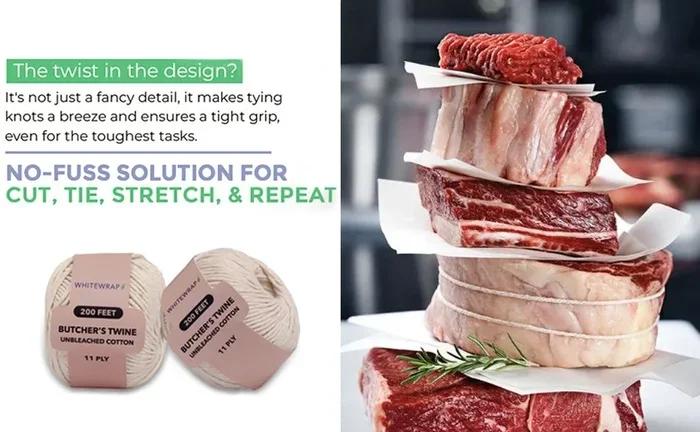
If there is one string you should reach for every time, it is cotton twine. Also known as butcher’s string or kitchen twine, this natural fiber is the most popular choice for oven cooking. It is affordable, widely available, and completely oven safe.
Why Cotton Twine Works So Well
Cotton twine is made from natural plant fibers. These fibers do not melt. They do not release toxic fumes. And they can handle temperatures up to 400°F without any issues. This makes cotton the go-to option for trussing poultry, tying roasts, and bundling herbs.
Here are some reasons cotton twine is the best choice:
- High heat resistance: Handles temperatures up to 400°F easily.
- Food safe: Made from natural fibers with no harmful chemicals.
- Affordable: A roll costs just a few dollars and lasts a long time.
- Easy to find: Available at every grocery store and online.
- Biodegradable: It is an eco-friendly option compared to synthetic alternatives.
How to Use Cotton Twine in the Oven
Using cotton twine is simple. First, make sure your string is dry. Wet string can burn faster. Then, tie your food securely but not too tight. You want the string to hold the shape without cutting into the meat.
Place your tied food on a baking sheet or roasting pan. Set your oven to the recommended temperature. Most cotton twine works perfectly at standard roasting temperatures between 325°F and 400°F. When your dish is done, simply remove the string before serving.
Quick Tip: If you are using cotton twine at 400°F or above, keep an eye on it. Overly long cooking times at very high heat can cause the string to brown or char. This is normal and not dangerous, but it might affect the appearance of your dish.
Silicone String: A Modern and Heat-Proof Option
If you are looking for something more durable, silicone string is worth considering. This modern alternative has gained popularity in recent years, and for good reason. It handles extreme heat and can be reused multiple times.
What Makes Silicone String Different?
Silicone is a synthetic material, but unlike plastic, it is remarkably heat resistant. High-quality silicone string can withstand temperatures up to 500°F. It does not melt, warp, or release harmful substances when exposed to oven heat.
Here is why silicone string is a great choice for oven-safe cooking:
- Extreme heat tolerance: Safe up to 500°F, making it ideal for high-heat roasting.
- Reusable: Wash it after use and it is ready for the next time.
- Flexible and strong: It holds tight and does not break easily.
- Non-toxic: Food-grade silicone is safe for cooking and does not release chemicals.
- Easy to clean: Just rinse it with warm soapy water after use.
When to Choose Silicone Over Cotton
Silicone string shines when you need to cook at very high temperatures. If your recipe calls for roasting at 450°F or above, silicone is the safer bet. It is also a great choice if you want a reusable option that reduces waste.
However, silicone string is less common than cotton twine. You might need to buy it online or from specialty kitchen stores. It is also slightly more expensive. But if you cook frequently, the investment pays off quickly.
Strings to Avoid Putting in the Oven
Knowing what works is only half the battle. You also need to know what to avoid. Some strings are never safe for oven use, no matter what the package says. Let us look at the ones you should steer clear of.
Plastic and Synthetic Strings
Plastic string is the worst option for oven use. It might look similar to kitchen twine, but it behaves very differently under heat. Plastic starts to soften at low temperatures and can melt completely at oven heat.
When plastic string melts, it can:
- Stick to your food: Melted plastic is nearly impossible to remove.
- Release toxic fumes: Chemical fumes are dangerous to inhale and contaminate food.
- Create a mess: Melted plastic can stick to your pans and oven walls.
- Start a fire: In extreme cases, melting plastic can ignite.
Always check the material before using any string in the oven. If it is made from nylon, polyester, or any plastic-based material, keep it far away from heat.
Floral and Craft String
This one surprises a lot of people. Floral string and craft string are not food safe. They are often treated with chemicals, dyes, or coatings that are toxic when heated. Even if the string looks harmless, it can release dangerous fumes in the oven.
Never use craft string or floral wire in the oven. The risk far outweighs any convenience. Always use string that is specifically labeled as food safe or kitchen grade.
Wire and Metal Strings
Some recipes call for kitchen twine, but people sometimes confuse this with thin wire. Metal wire is not the same thing. While some metal is oven safe, thin wire can conduct heat unevenly and burn your food. It can also be a choking hazard if small pieces break off.
Stick to natural fibers or silicone for your oven cooking needs. Metal has no place in your kitchen string lineup.
Parchment Paper: A Smart Alternative to String
Sometimes you do not need string at all. Parchment paper is a fantastic alternative for securing and wrapping food in the oven. It is heat resistant, food safe, and incredibly versatile.
How Parchment Paper Compares to String
Parchment paper can handle temperatures up to 450°F. It creates a natural barrier between your food and the pan. You can wrap vegetables, fish, or chicken in parchment and tie it shut with a simple fold.
Here are some benefits of using parchment paper instead of string:
- No melting risk: Parchment is designed for high-heat use.
- Easy cleanup: Just throw it away after cooking.
- Non-stick surface: Food slides right off.
- No tying required: Simple folds and pleats work just as well.
- Keeps food moist: Parchment traps steam and prevents drying out.
When Parchment Paper Works Best
Parchment paper is perfect for en papillote cooking, where you steam food in a sealed pouch. It also works great for roasting vegetables. Simply place your veggies on a parchment-lined sheet, fold the edges up, and pop it in the oven.
However, parchment paper is not ideal for trussing meat. If you need to tie a roast or a chicken, cotton twine or silicone string is still the better choice. Use parchment for wrapping and string for tying. Together, they cover all your oven cooking needs.
How to Choose the Right String for Your Oven
With so many options available, choosing the right string can feel overwhelming. But it does not have to be. A few simple guidelines will help you make the best choice every time.
Check the Material First
Always look at what the string is made from. Natural fibers like cotton and jute are safe for oven use. Silicone is excellent for high heat. Plastic, nylon, and polyester should be avoided at all costs.
If the package does not list the material, do not use it in the oven. When in doubt, choose a different product. There is no reason to take chances with your food and your safety.
Consider the Temperature
Your oven temperature should guide your choice. For standard roasting at 350°F to 400°F, cotton twine works perfectly. For higher temperatures above 400°F, silicone string is the safer option.
Here is a quick comparison table to help you decide:
String Type | Max Temperature | Oven Safe? | Reusable?
Cotton Twine | Up to 400°F | Yes | No
Silicone String | Up to 500°F | Yes | Yes
Jute String | Up to 300°F | Yes (low heat) | No
Nylon/Polyester | Melts at 200°F+ | No | No
Parchment Paper | Up to 450°F | Yes (as wrapper) | No
As you can see, the right choice depends on what you are cooking and at what temperature. Keep this table in mind for your next roast or bake.
Buy Quality Over Quantity
Cheap string might save you a few cents, but it could cost you a ruined meal. Look for reputable brands that clearly label their products as food safe and oven appropriate. A good quality cotton twine or silicone string will last longer and perform better.
Expert Insight: “The best kitchen string is the one you trust. If you are unsure about a product, do a small test. Tie a piece of string to a oven-safe pan and heat it at your target temperature for a few minutes. If it holds up without melting or smoking, it is safe to use.”
Common Mistakes People Make with Kitchen String
Even experienced cooks make mistakes when it comes to oven string. Here are the most common errors and how to avoid them.
Using the Wrong Type of String
The biggest mistake is grabbing any string from the pantry and putting it in the oven. Not all string is created equal. As we covered, synthetic strings can melt and release harmful chemicals. Always verify the material before cooking.
Tying Too Tightly
It might seem logical to tie your food as tight as possible. But overly tight string can cut into the meat during cooking. As the meat expands from the heat, tight string can restrict movement and create uneven cooking.
Tie your string snugly but not tightly. You want it secure enough to hold the shape, but loose enough to allow the food to expand naturally.
Forgetting to Remove the String
This sounds obvious, but it happens more often than you would think. Some people leave the string on when they serve the dish. Not only does this look unappetizing, but it can also be a choking hazard for young children.
Always remove the string before serving. If you are unsure whether the string is still safe to eat, it is better to take it off and throw it away.
Reusing Damaged String
If your string looks frayed, discolored, or damaged, do not reuse it. Damaged string is weaker and more likely to break during cooking. It might also have a lower heat tolerance than intact string. Always use fresh string for best results.
Best Practices for Using String in the Oven
Now that you know which strings are safe and which to avoid, let us talk about best practices. These tips will help you get the best results every time you use string in the oven.
Soak Cotton Twine Before Use
This is a pro tip that many people do not know about. Soaking cotton twine in water for a few minutes before tying your food helps prevent it from burning. Wet cotton takes longer to char, giving you a wider window for perfectly cooked meals.
Quick Tip: Keep a bowl of water nearby whenever you are working with cotton twine. A quick dip before tying can make a big difference.
Use Kitchen Shears for Clean Cuts
Never pull or tear your string. Use kitchen shears to cut clean, even lengths. Rough edges can fray during cooking, which weakens the string and increases the chance of it coming loose in the oven.
Label Your String Storage
If you keep multiple types of string in your kitchen, label them clearly. This prevents mix-ups and ensures you always grab the right one. A simple piece of tape on the spool with the material type and max temperature can save you from a costly mistake.
Store String in a Cool, Dry Place
Moisture and heat can degrade string over time, even if it is not in the oven yet. Store your kitchen twine in a cool, dry pantry or drawer. Avoid storing it near the stove or oven where ambient heat can weaken the fibers.
Frequently Asked Questions
Can you put any string in the oven?
No, not all strings are safe for oven use. Only natural fiber strings like cotton twine, jute, and food-grade silicone string should go in the oven. Synthetic strings like nylon and polyester will melt and can release harmful chemicals. Always check the material and heat rating before using any string in the oven.
Is butcher’s string oven safe?
Yes, butcher’s string is oven safe. It is typically made from 100% cotton and can handle temperatures up to 400°F. Butcher’s string is one of the most popular choices for trussing meat and tying roasts. Just make sure it is labeled as food grade and free from any coatings or treatments.
Can you use dental floss in the oven?
No, dental floss should never be used in the oven. Most dental floss is made from nylon or PTFE, which are not safe at high temperatures. These materials can melt, release toxic fumes, and contaminate your food. Stick to cotton twine or silicone string for all your oven cooking needs.
What is the highest temperature cotton twine can handle?
Most cotton twine can handle temperatures up to 400°F. Some high-quality brands can withstand slightly higher temperatures. Always check the manufacturer’s guidelines on the package. If you are cooking above 400°F, silicone string is a better option since it can handle up to 500°F.
Can you reuse kitchen string after oven use?
It depends on the material. Cotton twine is single-use and should be discarded after cooking. Silicone string, on the other hand, can be washed and reused multiple times. Jute string is also single-use. Always inspect your string for damage before reusing anything, and when in doubt, throw it out and use a fresh piece.
What can I use instead of string to tie food for the oven?
Parchment paper is the best alternative to string for wrapping and securing food in the oven. You can also use metal skewers or toothpicks to hold things in place for smaller items. For trussing meat specifically, cotton twine remains the best option. Parchment paper works great for roasting vegetables and fish without any tying required.
Conclusion
The answer to what string can go in the oven is simpler than you might think. Cotton twine is the most reliable and widely used option for oven-safe cooking. It handles standard roasting temperatures with ease and is completely food safe. Silicone string is the best choice for high-heat cooking, offering heat resistance up to 500°F and the bonus of being reusable.
On the other hand, plastic, synthetic, and craft strings should always be kept away from the oven. They melt, release harmful chemicals, and can ruin your food and your cookware. Parchment paper is also a smart alternative when you do not need to tie anything but want a heat-safe wrapper.
By following the tips and guidelines in this article, you can cook with confidence every time. Check the material, match the string to your oven temperature, and always prioritize food safety. The right kitchen string makes a real difference in your cooking results.
Next time you are preparing a roast, trussing a chicken, or bundling herbs, you will know exactly what to reach for. Keep a roll of cotton twine and a length of silicone string in your kitchen, and you will be ready for any recipe that comes your way. Happy cooking!