Can Non Stick Pans Go In The Oven Here Is The Answer
Can non stick pans go in the oven? The short answer is yes, but with important caveats. Your non stick coating has a maximum oven temperature that you must never exceed, or you risk permanent non stick pan damage and harmful fumes. Always check the pan manufacturer guidelines before placing any oven safe cookware in a hot oven, and pay close attention to handle materials and coating type.
Have you ever finished cooking a beautiful stovetop meal and thought, “I should just pop this pan in the oven to finish”? It is a natural instinct. Whether you are searing a steak and want to finish it in the oven or baking a one-pan dinner, the idea of keeping your favorite pan in the heat is tempting.
But here is the thing. Not every pan can handle the oven. And when it comes to non stick pans, the answer is not as simple as yes or no. There are temperature limits, coating types, handle materials, and manufacturer guidelines that all play a role. So let us break this down once and for all. By the end of this guide, you will know exactly can non stick pans go in the oven and how to do it safely every single time.
The truth is that many home cooks throw their non stick pans in the oven without thinking twice. Some do it just fine for years. Others ruin a perfectly good pan in one session. The difference comes down to knowledge. And that is exactly what we are going to share with you today. We will cover everything from coating types to temperature limits, from handle safety to common mistakes that can destroy your cookware.
Key Takeaways
- Not all non stick pans are oven safe: Always check the manufacturer label for the maximum oven safe temperature before using your pan in the oven.
- PTFE coatings have lower limits: Traditional Teflon non stick pans typically handle up to 500 degrees Fahrenheit, while ceramic coatings may go higher.
- Handles matter just as much as the coating: Even if the pan body is oven safe, a plastic or silicone handle can melt or release harmful fumes at high heat.
- Never preheat an empty non stick pan in the oven: This can cause thermal shock and ruin the non stick surface permanently.
- The broiler is a danger zone: Most non stick pans are not broiler safe because the direct top heat can exceed safe limits quickly.
- Proper care extends oven life: Hand washing and using soft utensils help maintain the coating so your pan stays oven safe for years.
- When in doubt, use a different pan: If you are unsure about your non stick pan’s oven safety, reach for stainless steel or cast iron instead.
📑 Table of Contents
What Makes a Non Stick Pan Oven Safe
The question of whether your pan can handle oven heat comes down to three main factors. The coating material, the handle construction, and the overall build quality. Let us look at each one closely so you understand exactly what to look for.
Understanding the Non Stick Coating
The coating on your pan is the most important factor when deciding if it is oven safe. There are two main types of non stick coatings you will encounter. The first is PTFE, which you probably know by the brand name Teflon. This is the classic non stick coating that has been around for decades. It creates a super smooth surface that food barely sticks to.
The second type is ceramic coating. Ceramic non stick pans have become very popular in recent years. They are often marketed as PFOA free and eco friendly. Ceramic coatings generally handle higher temperatures than PTFE, but they also wear out faster with heavy use.
Here is the key takeaway. The coating determines your maximum oven temperature. PTFE coatings typically max out around 500 degrees Fahrenheit. Go above that and the coating starts to break down. Ceramic coatings can sometimes handle up to 550 or even 600 degrees, but this varies by brand. Always check the label or manual. Never guess.
Why Pan Handles Matter Just as Much
People forget about handles all the time. They focus on the cooking surface and ignore the part that touches their hands. But your non stick pan handle is just as important when it comes to oven safety.
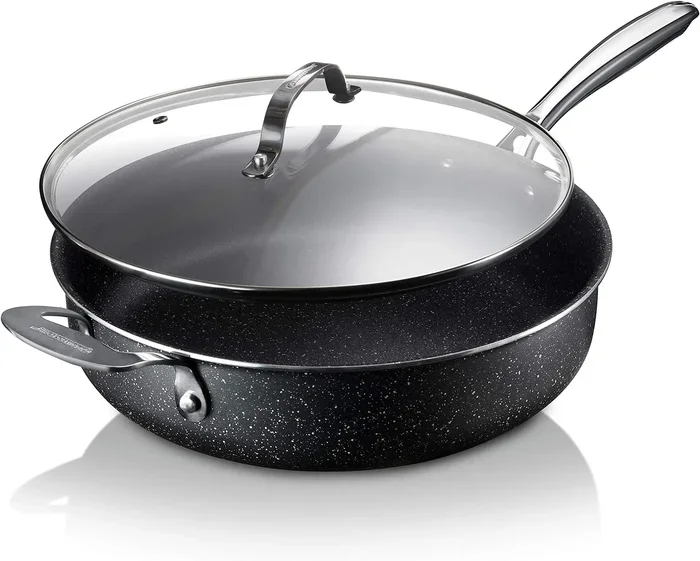
Most non stick pans come with one of three handle types. Metal handles are generally oven safe up to very high temperatures. They can handle the heat without any issues. Silicone wrapped handles can usually tolerate up to 400 or 450 degrees. They are comfortable and heat resistant, but they have limits. And then there are plastic handles. These are the ones you need to watch out for.
A plastic handle can melt, warp, or release harmful fumes when exposed to high oven temperatures. Even if the pan body is completely oven safe, a plastic handle makes it unsafe for oven use. Some pans come with removable handles, which is a great feature if you want to use them in the oven. Always check what your handle is made of before putting your pan in the heat.
Temperature Limits Every Cook Should Know
Temperature is the biggest factor in whether your non stick skillet oven experience will be a success or a disaster. Let us break down the numbers so you know exactly what to expect.
PTFE vs Ceramic: What Is the Difference
PTFE and ceramic coatings behave very differently under heat. PTFE, or polytetrafluoroethylene, starts to degrade at around 500 degrees Fahrenheit. At temperatures above 660 degrees, it can release toxic fumes that are dangerous to humans and lethal to birds. This is why you should never overheat a PTFE pan, whether on the stove or in the oven.
Ceramic coatings are made from inorganic minerals. They can generally withstand higher temperatures, often up to 550 or 600 degrees Fahrenheit. However, ceramic coatings do not last as long as PTFE. They tend to lose their non stick properties after a year or two of regular use, even with proper care.
When you are using your pan for non stick baking or finishing dishes in the oven, knowing your coating type is essential. A PTFE pan at 450 degrees is generally safe. A PTFE pan at 550 degrees is a recipe for disaster. The same logic applies to ceramic pans, just at slightly higher thresholds.
What Happens When You Exceed the Limit
So what actually happens if you put your pan in the oven and it gets too hot? The first sign is usually a change in the pan’s appearance. You might notice the coating turning brown or developing a rough, patchy texture. The non stick surface starts to peel or flake. Food begins to stick badly, and no amount of oil or butter will fix it.
Beyond the visible damage, there are health concerns. Overheated PTFE coatings release fumes that can cause polymer fume fever. Symptoms include fever, chills, and body aches. While it is usually temporary, it is certainly not something you want to deal with. For pet birds, these fumes can be fatal even in small concentrations.
Thermal shock is another risk. If you take a cold pan straight from the fridge and put it in a hot oven, the sudden temperature change can warp the pan or crack the coating. This is called thermal shock, and it can ruin your pan instantly. Always let your pan come to room temperature before placing it in a hot oven.
How to Check If Your Pan Is Oven Safe
Figuring out whether your specific pan can go in the oven is not hard, but it does require a little effort. Here is exactly what you should do.
Read the Manufacturer Guidelines
The first and best place to look is the manufacturer’s guidelines. Every reputable pan brand includes oven safety information on the packaging, in the user manual, or on their website. Look for the oven safe temperature rating. Some brands clearly state “oven safe up to 500 degrees Fahrenheit.” Others might say “not oven safe” right on the packaging.
If you bought your pan a while ago and threw away the packaging, do not worry. Most manufacturers have their product information available online. Search for your pan model number, and you should find the specifications quickly. This is the most reliable way to know your pan’s limits.
Look for Oven Safe Symbols on the Pan
Many pans have symbols stamped or printed on the bottom. Look for an oven icon, which usually looks like a small oven with waves inside. Next to the icon, there is often a temperature number. This tells you the maximum oven safe temperature at a glance.
If you see a symbol with a crossed-out oven, that means the pan is not oven safe. Do not ignore this symbol. Some pans also have a symbol showing a handle with a specific temperature rating. This is especially helpful for pans with silicone or plastic handles. The symbol tells you exactly how hot the handle can get.
If you cannot find any symbols or markings, it is better to be safe than sorry. Contact the manufacturer directly or avoid using the pan in the oven altogether. There is no reason to risk damaging your pan or your health.
Common Mistakes People Make with Non Stick Pans in the Oven
Even experienced cooks make mistakes when it comes to oven use. Here are the most common errors that lead to ruined pans and wasted money.
Using the Broiler Without Thinking
The broiler is one of the biggest dangers for non stick pans. Broilers produce intense direct heat from above, and temperatures can easily exceed 550 degrees Fahrenheit in the area closest to the heating element. Most non stick pans are simply not designed for this kind of heat.
Even if your pan is rated for 500 degrees, the broiler creates hot spots that can exceed that temperature in specific areas. The result is uneven coating damage and potential fume release. If you need to finish a dish under the broiler, transfer your food to a stainless steel or cast iron pan first. Leave the non stick pan out of the broiler entirely.
Ignoring Thermal Shock
Thermal shock happens when a pan experiences a sudden and extreme temperature change. A common example is taking a non stick pan from the refrigerator or freezer and placing it directly into a hot oven. The cold pan meets the hot air, and the sudden expansion can warp the metal and crack the coating.
Another example is rinsing a hot pan under cold water right after taking it out of the oven. This is a bad habit for any pan, but it is especially damaging for non stick surfaces. The rapid cooling can cause the coating to bubble, peel, or flake. Always let your pan cool down gradually before washing or exposing it to cold water.
Using Metal Utensils After Oven Use
Some people think that because the pan survived the oven, it is fine to use metal spatulas or forks on it afterward. This is not true. Oven heat can weaken the non stick coating, making it more susceptible to scratching. Metal utensils on an oven-used non stick pan can cause micro scratches that grow over time, eventually destroying the non stick surface.
Always use wooden, silicone, or nylon utensils on your non stick pans. This simple habit will protect the coating whether the pan has been in the oven or not. Your pan will last much longer, and you will get more value out of your investment.
Best Practices for Using Non Stick Pans in the Oven
If you have determined that your pan is oven safe, there are still best practices you should follow to get the most life out of it. These tips will help you use your oven safe non stick pan safely and effectively.
Preheating Do’s and Don’ts
Never preheat an empty non stick pan in the oven. An empty pan with no food or oil in it can overheat very quickly. The coating can reach dangerous temperatures before you even realize what is happening. Always put food or liquid in the pan before placing it in the oven.
If you need to preheat the oven, place the pan inside after the oven has already reached your target temperature. This gives you more control over the heat and reduces the risk of overheating the coating. A good rule of thumb is to never let your non stick pan exceed 450 degrees Fahrenheit in the oven, even if the manufacturer says it can handle higher temperatures. Staying a little below the maximum gives you a safety margin.
Cleaning and Storage Tips
Proper cleaning after oven use is essential for maintaining your pan’s non stick surface. Let the pan cool down before washing it. Never plunge a hot pan into cold water. Use warm water, a soft sponge, and mild dish soap. Avoid abrasive scrubbers or steel wool, which can scratch the coating.
Store your non stick pans carefully. Hanging them on a pot rack is great because it prevents scratches from stacking. If you must stack them, place a soft cloth or paper towel between each pan to protect the surfaces. A little extra care in storage goes a long way toward preserving the non stick finish.
When to Replace Your Non Stick Pan
Even with the best care, non stick pans do not last forever. If you notice peeling, flaking, or significant scratching on the coating, it is time to replace the pan. A damaged non stick coating in the oven can release harmful particles and fumes. Do not try to salvage a pan with visible coating damage.
As a general rule, most non stick pans last between one and five years depending on how often you use them and how well you care for them. If you use your pan in the oven regularly, it may wear out faster. Keep an eye on the condition and replace it when needed. Your health is worth more than saving a few dollars on an old pan.
Non Stick Pan Alternatives for High Heat Cooking
If you find that your non stick pan cannot handle the temperatures you need, there are great alternatives. These options let you use the oven without worrying about coating damage or toxic fumes.
Cast iron pans are excellent for oven use. They can handle temperatures well above 500 degrees and distribute heat beautifully. They require seasoning and a bit more maintenance, but they last for decades with proper care. A cast iron skillet is one of the most versatile oven safe cookware pieces you can own.
Stainless steel pans are another great option. They are durable, non reactive, and can handle very high oven temperatures. They do not have a non stick coating, so you need to use enough oil or fat to prevent sticking. But for many recipes, the tradeoff is worth it.
Carbon steel pans are similar to cast iron but lighter. They heat up quickly and handle high oven temperatures with ease. They are a favorite among professional chefs for oven-finishing dishes and broiling.
If you love the convenience of non stick but need higher heat tolerance, consider a ceramic non stick pan rated for oven use. These pans offer a healthier alternative to PTFE and can handle slightly higher temperatures. Just remember that ceramic coatings wear out faster, so they are best for moderate oven use.
Conclusion
So, can non stick pans go in the oven? Yes, they can, but only under the right conditions. You need to know your coating type, check the maximum oven temperature, inspect the handle material, and follow the manufacturer guidelines. Taking these steps ensures that your non stick pan stays safe, effective, and free from damage.
The most important thing to remember is that every pan is different. There is no one-size-fits-all answer. A premium PTFE pan from a reputable brand may handle 500 degrees easily, while a budget ceramic pan might only be safe up to 400 degrees. Always do your homework before placing any pan in the oven.
Use the tips and best practices from this guide to get the most out of your non stick cookware. Avoid common mistakes like broiler use, thermal shock, and metal utensils. And when it is time to replace a worn-out pan, do not hesitate. A new pan is a small price for your health and safety.
Now that you know the answer, you can cook with confidence. Whether you are finishing a steak in the oven, baking a frittata, or roasting vegetables, you will know exactly what your non stick pan can handle. Happy cooking.
Frequently Asked Questions
What temperature can non stick pans handle in the oven?
Most non stick pans are safe in the oven up to 500 degrees Fahrenheit if they have a PTFE coating. Ceramic non stick pans may handle slightly higher temperatures, often up to 550 or 600 degrees. Always check the manufacturer guidelines for your specific pan, as the maximum oven safe temperature varies by brand and model.
Is Teflon safe to use in the oven?
Teflon, which is a brand of PTFE coating, is generally safe in the oven up to 500 degrees Fahrenheit. Above this temperature, the coating begins to break down and can release toxic fumes. These fumes are harmful to humans and can be fatal to pet birds. Always stay below the recommended temperature to keep your Teflon pan safe.
Can you put a non stick pan under the broiler?
Most non stick pans are not broiler safe. The broiler produces intense direct heat that can exceed the pan’s maximum temperature in localized spots. This can damage the coating and release harmful fumes. If you need to use the broiler, transfer your food to a stainless steel or cast iron pan first.
How do you know if your non stick pan is oven safe?
Check the bottom of the pan for an oven safe symbol, which looks like a small oven icon with a temperature number. You can also consult the manufacturer’s guidelines on the packaging or their website. If there are no markings or guidelines available, it is safest to assume the pan is not oven safe.
What happens if you put a non stick pan in the oven too hot?
Overheating a non stick pan can cause the coating to peel, bubble, or flake. The pan loses its non stick properties and food starts sticking badly. PTFE coatings above 500 degrees can release toxic fumes that cause polymer fume fever and are dangerous to birds. Always stay within the recommended temperature range.
Can ceramic non stick pans go in the oven?
Yes, ceramic non stick pans generally handle higher oven temperatures than PTFE pans, often up to 550 or 600 degrees Fahrenheit. However, ceramic coatings wear out faster with repeated use and high heat exposure. Always check the specific manufacturer guidelines for your ceramic pan before using it in the oven.